

UMD enforces new scooter, bike safety rules on campus
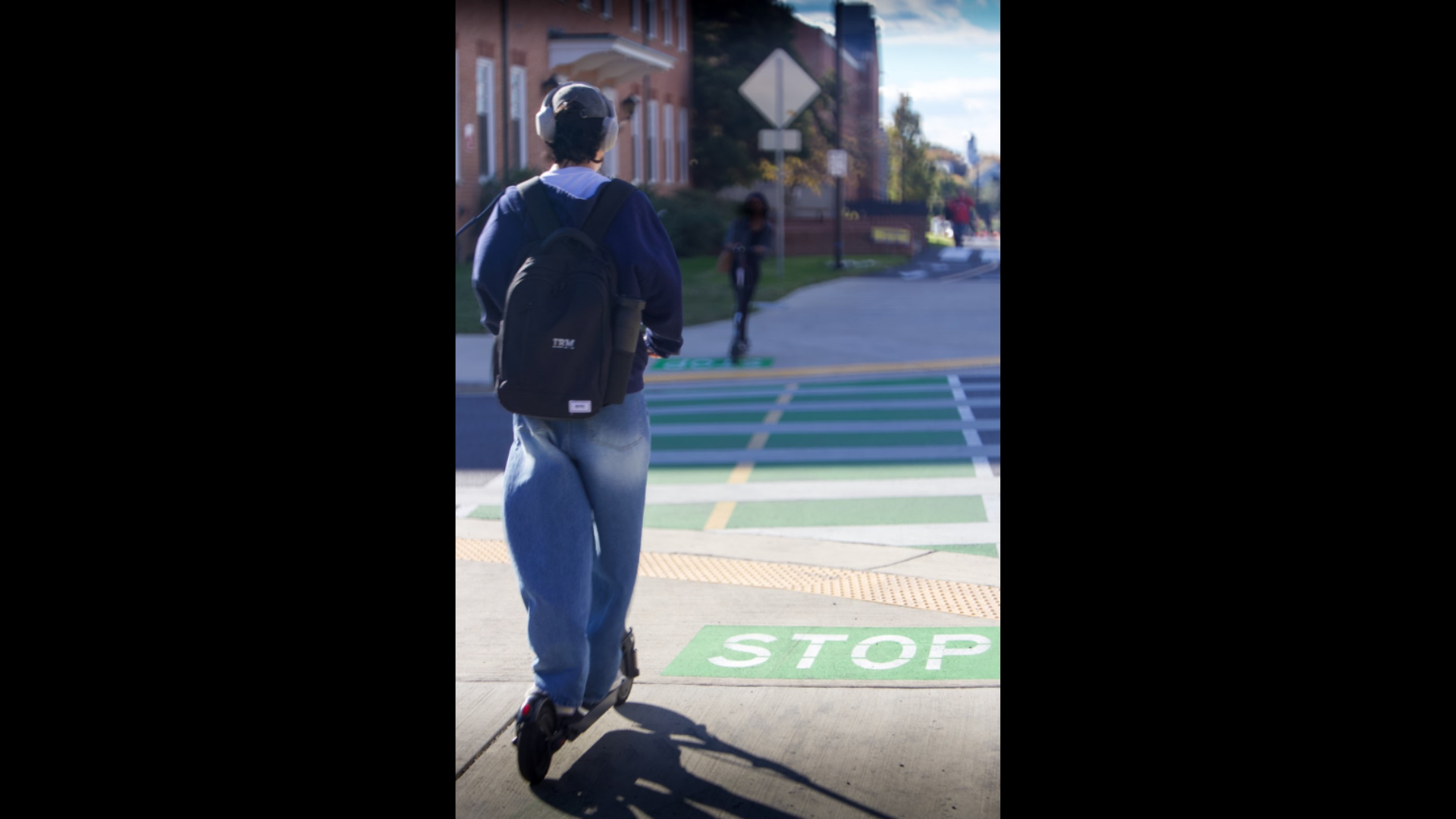
University of Maryland students are adjusting to new transportation policies this semester as the university enforces stricter policies for scooter and bike riders, requiring helmets and limiting how many students can bring micromobility vehicles onto campus.
The university’s new guidelines, announced at the beginning of the 2025-2026 school year, require that riders living on campus using scooters and bicycles to wear helmets and follow the designated travel routes. Improper riding could result in a ticket that includes a fine up to $70, according to the Department of Transportation Services website.
Scooter riders are also prohibited from riding in certain high traffic areas like Mckeldin Mall and sidewalks in front of Adele H. Stamp Student Union. A policy announced last year, which bars students from bringing personal scooters into some academic buildings, remains in effect.
The new guidelines prohibit students from bringing in personal or privately owned scooters onto campus without using the university’s new “Micromobility Registration” system. The program tracks scooter ownership and helps the University of Maryland Police Department to manage parking and charging areas around campus.
“They banned scooters at the start of the semester. I actually bought one at the beginning, and they didn’t give us much of a warning, so I ended up losing that money,” said Bianca Patch, a freshman in the letters and sciences program.
“It [registration] honestly wasn’t that bad, I was surprised at how easy it was to do it because most of it was just online. The process took maybe five to eight minutes, and then I just had to walk to the transportation office to get a sticker,” Patch said.
The university announced the new policies after an increase in scooter accidents on campus during the 2024-2025 school year, according to the DOTS website. The update came in an email from Vice President Charles Reuning and Police Chief David Mitchell. DOTS said the goal is to improve safety and reduce collisions.
“When it comes down to safety, micromobility vehicles can also be prone to collisions, due to their small size, lack of safety protection and sometimes inexperienced drivers,” said UMPD spokesperson Lt. Rosanne Hoass. “Helmet wearing is a critical component of safety when operating a micromobility vehicle, such as an e-scooter.”
According to DOTS data, scooter-related accidents on campus rose more than 30% last school year, prompting university officials to revisit safety procedures and expand helmet requirements.
“I don’t typically wear my helmet. I have curly hair, and that stuff will tamp it down so much — it’ll get sweaty and gross. I hate helmets,” Patch said. “I understand the need for safety, especially considering all of the accidents, but I don’t think it’s super necessary. Most people here are over 18 and we’re adults.”
Other students see the helmet rule as an important precaution. “I do think the helmet policy is fair and necessary to keep students safe,” said Matthew Edick, a sophomore information sciences major who uses a bike to get around campus. “I did start bringing my helmet to follow the guidelines.”
But not all students have seen a difference. “I haven’t noticed any changes — there are still tons of scooters both on sidewalks and the roads,” said Josie Simmons, a sophomore kinesiology major who does not ride a scooter.
Simmons said she bought a scooter last year but was unable to bring it this year because she couldn’t store it indoors or protect it from bad weather. “It feels unfair because it seems like the university is promoting the usage of the Veo scooters despite requiring helmets now,” she said.
The new policies have resulted in mixed emotions among the students, especially those who rely on scooters for their daily commute to classes.
Edick agreed that the updated rules have made campus safer overall. “I do believe it has decreased incidents as there are fewer unregistered scooters that could pose danger, and increased helmet use promotes safety,” he said.
These changes have forced students who depend on scooters or bikes to switch their daily habits. Other students have decided to deal with walking to class. “I walk to class everyday, I walk 20 minutes everyday,” Simmons said.
“There are still many scooters weaving between crowds of people, so if the university is trying to reduce scooter usage or accidents, it’s not working very well,” Simmons said.
The new policy has raised questions about how students get around campus, and how the university balances safety with convenience.
“When it comes to education, the university sends frequent written communications to our community, posts on social media, and holds in-person events to reinforce safety messages,” Lt. Hoaas said. “The mission is to educate our community on the importance of being safe while driving and in this case, remind them of the new interim helmet policy that is in effect on campus.”