UMD community members urge government collaboration after Potomac sewage spill

University of Maryland community members are urging local governments to collaborate on solutions after one of the largest wastewater spills in U.S. history occurred only about 20 miles from campus.
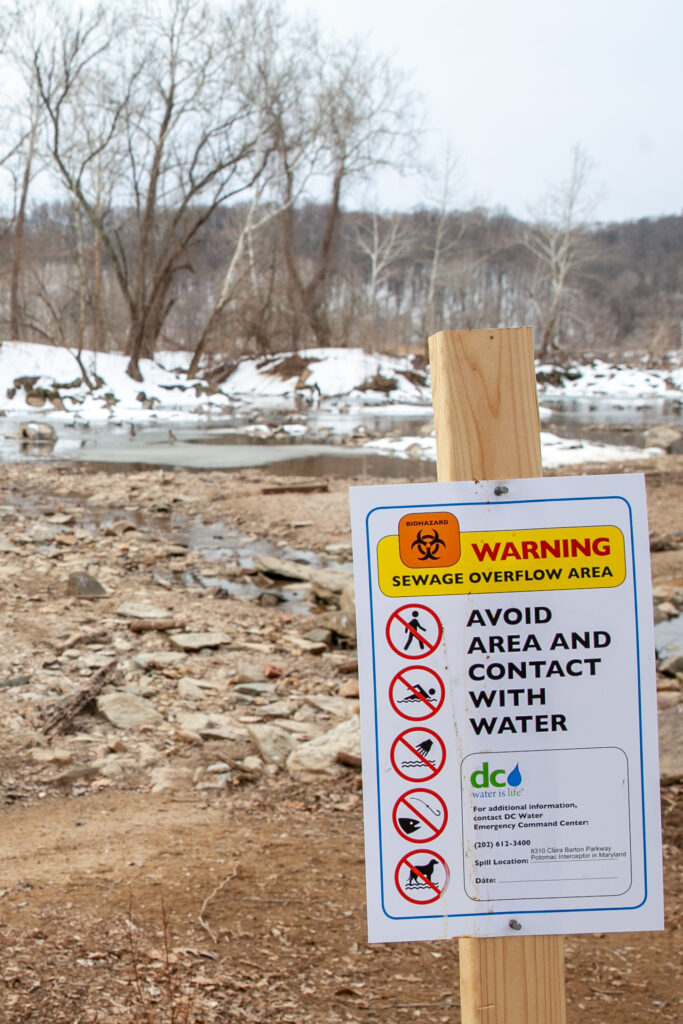
Roughly 243 million gallons of wastewater overflowed into the Potomac River when part of a sewer system collapsed on Jan. 19, according to a D.C. Water press release. UMD researchers found high levels of disease-causing pathogens and fecal-related bacteria following the collapse.
The bacteria— E. Coli, Staphylococcus Aureus and an antibiotic-resistant strain of mRSA, can cause serious injury or death, according to a UMD School of Public Health press release.
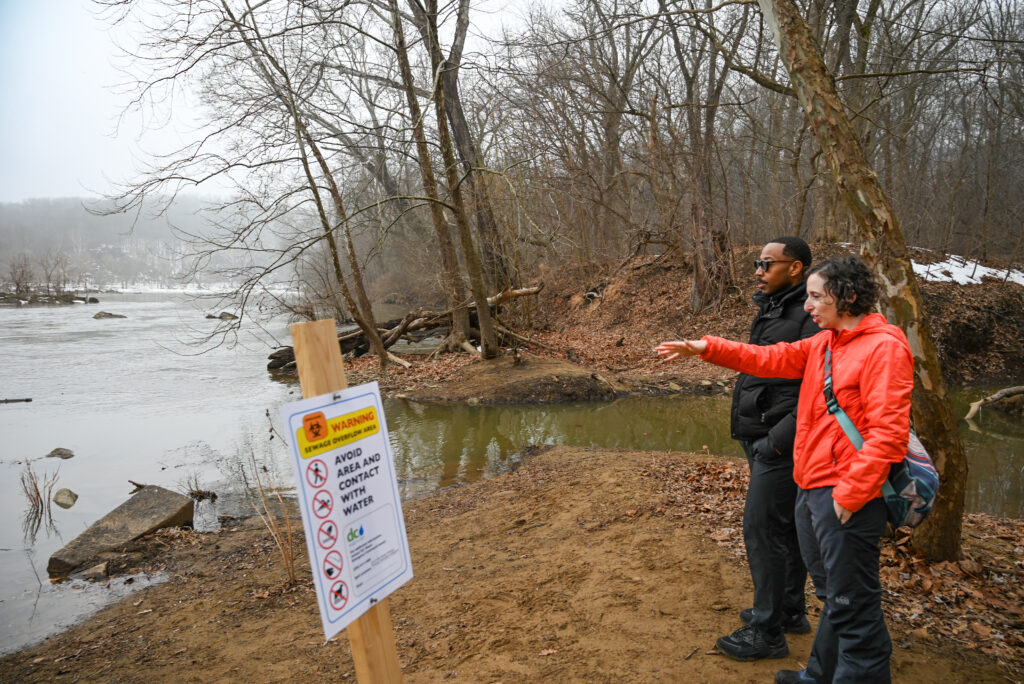
“At the moment, it’s not safe,” said Marccus Hendricks, an environmental planning professor and co-lead of the Water Emergency Team. “In general, students and residents should be concerned because these waterways are interconnected.”
WET is a rapid-response team developed to address sewage overflow in African American communities. The team is community-driven, responding to backups in Baltimore and the surrounding region. Hendricks’ co-leader, Rachel Rosenberg Goldstein, is in charge of the Water Quality, Outreach and Wellness Lab. The lab, along with WET, went directly to the collapse sites to test the water for fecal bacteria and pathogens.
Claire Barlow, a second-year Ph.D. candidate in the environmental health sciences program, visited the site with a fellow Ph.D. student after Rosenberg Goldstein learned about the spill. Barlow said that while the findings were not surprising, it’s concerning because the wastewater’s bacteria are present in the environment and surface waters.
“We kind of called it a river of sewage,” Barlow said. “We’re just encouraging people to avoid recreation or coming into contact, because if you do ingest [it] or if this comes up onto your skin, there is a greater risk of being exposed to a pathogen which can make you sick.”
Alex Tran, a freshman public health science major and environmental chair at UMD’s Students Engaged in Public Health, said that the spill can smother aquatic life and severely impact humans, who can come into contact with the river and get a staph infection.
“This is the largest sewage spill, if not one of the largest in U.S. history,” Tran said. “It seems like nobody is talking about it.”
Hendricks believes that a solution to the spill involves a multi-jurisdictional approach that involves agreements in terms of resources, financing, monitoring and assessments to make sure sole responsibility doesn’t fall upon one jurisdiction.
“The Potomac is an important water resource and asset, not only for D.C. or Maryland or Virginia, but the entire nation,” Hendricks said. “I would just like to see some cooperation, some intentionality to make sure these assets have the resources and attention that they deserve.”
But the Federal government is already at odds with Annapolis. President Donald Trump aimed at Gov. Wes Moore in a Truth Social post on Feb. 16, calling the spill a result of “gross mismanagement of Local Democrat Leaders, particularly, Governor Wes Moore, of Maryland.”
D.C. Water maintains and operates the sewer line, known as the Potomac Interceptor, according to a Maryland Department of the Environment press release.
“This is a situation greater than the political banter that’s happening between Maryland and our federal administration,” Tran said. “Coming together and bringing resources together to get this situation fixed as fast as possible is what we need to do.”
Bill Assogba, a junior international relations major, said the spill was shocking, citing the causes as pipe mismanagement and local government incompetence.
“It’s really disappointing,” Assogba said. “It’s a failure of government. I think every [official] in the DMV area should be a little ashamed.”
Assogba said that local elected officials should be ashamed because it’s their job to monitor the Potomac. He wants to see more government collaboration across Greater Washington as a solution, starting with a joint task force that advocates for better infrastructure.
“No one in the DMV wants the Potomac River or any of our water to become poisonous, intoxicated or destroyed, especially because [our nature and water is a big draw factor for us],” Assogba said.