

From “Everybody Hates Chris” to “Abbott Elementary,” Tyler James Williams reflects on career at UMD
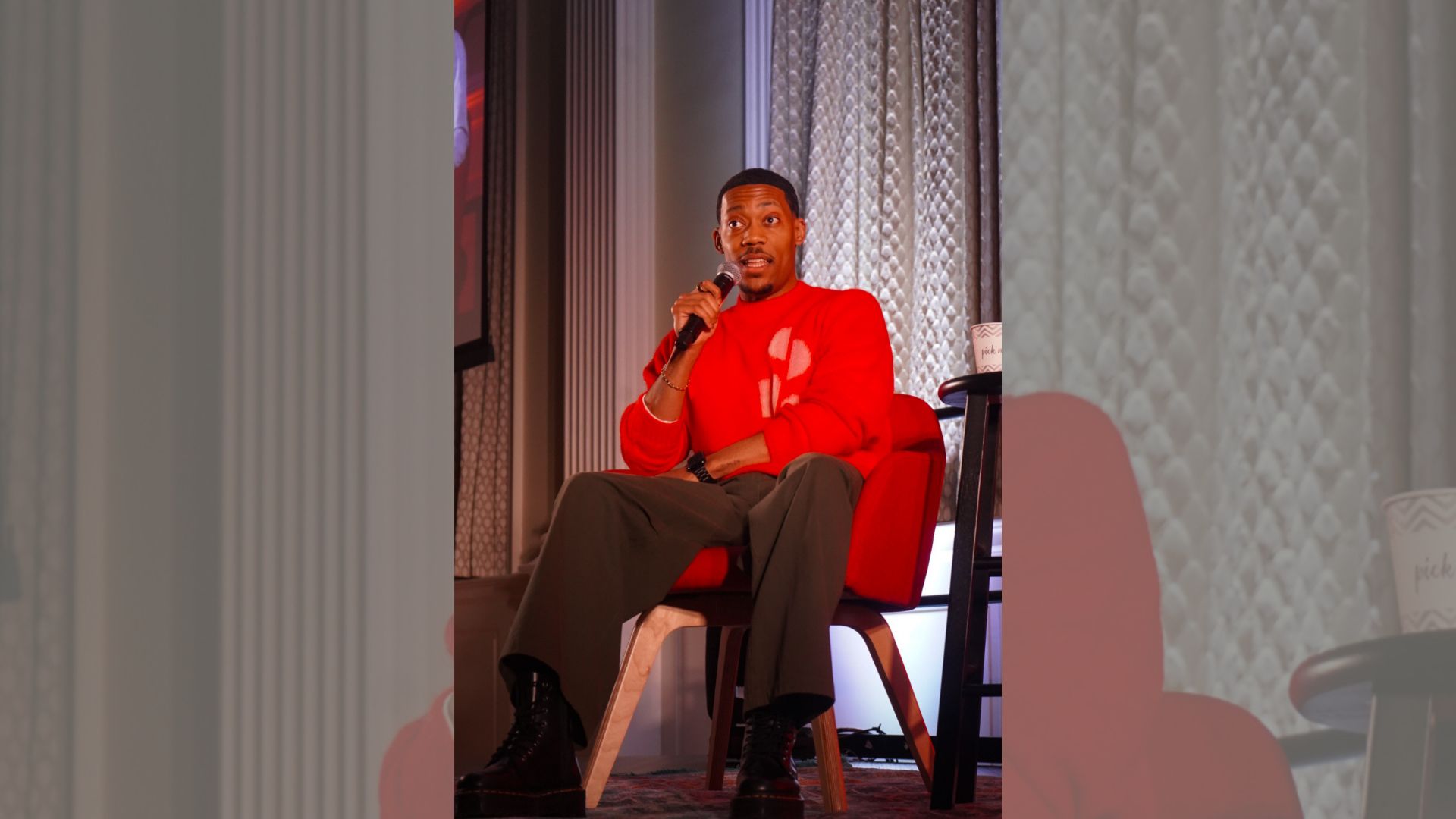
Tyler James Williams reflected on his time as an actor from his time on “Everybody Hates Chris” to his most recent work on “Abbott Elementary” at the spring lecture held by Student Entertainment Events on April 2 at the University of Maryland.
“There is nothing more tragic than wasted momentum,” he said. “I never wanted to disrespect the work of my past self by dropping that ball.”
Williams spoke to the Black Explosion about his upbringing in Hollywood, reaching beyond the Black community and “Abbott Elementary.”
At the beginning of his career, acting was treated like an extracurricular activity in his family. Once he began taking acting seriously, his parents made sure he understood acting was a craft and, more importantly, a job.
From 2005 to 2009, Williams starred as Chris in the hit show “Everybody Hates Chris,” created by comedian Chris Rock. Chris, the lead character, was a quirky Black kid attending a primarily white school in New York City.
As the title character, Williams said he had the weight of nearly 200 jobs on his back; one bad line delivery could cost the crew their livelihood. Reflecting on this time in his life, Williams acknowledged that it forced him to learn how to be a good performer while creating too much pressure for a 12-year-old.
For Williams, it was imperative that he diversified his roles after “Everybody Hates Chris.” He wanted to make sure he expanded his range outside of what he called being “Black famous”, a celebrity who is well known in the Black community but not to broader audiences.
Although Williams has expanded outside of being “Black famous,” he made it clear that the term should be preserved because of the impact it has on the Black community. Williams said Black Hollywood is small and foundational for his and many others’ careers. It’s important to maintain that community by providing roles and scripts for each other, according to Williams.
Junior animal science major Sarai Celestine talked about how she related to his experience as a Black actor. She emphasized how important it is for her to see Black people in her field.
“When he related to the point about like seeing other Black actors and Black people within the industry, I think that’s super, at least for me, that’s really relatable because my industry doesn’t have many Black people in it either,” Celestine said.
After finishing “Everybody Hates Chris,” Williams spent time as a ghost writer for rappers in the industry. Growing up in New York, Williams was more than familiar with battle rap and that experience inspired his next big project, Disney Channel’s “Let It Shine.”
He said the film was pitched as the “8 Mile” on Disney Channel, and other actors were nervous about taking the role.
The movie “was a job that could’ve been the end of my career,” he said.
“Let It Shine” earned multiple awards and nominations after its release, including Williams being nominated for an NAACP Image Award for Outstanding Performance in a Youth/Children’s Program for his role.
Transitioning from being a child actor to an adult, Williams understood that he would have to walk his audience through his growth and compared it to seeing a young family member grow up.
However, the stress that he experienced as a child and during this transition led to his Crohn’s disease diagnosis. Williams was hospitalized for over a year and learned how to set boundaries for his body. He told the audience his diagnosis has kept him in check mentally and physically.
“You can’t pour from an empty cup,” Williams said.
After the COVID-19 pandemic began, he received a direct message from actress and writer Quinta Brunson, offering him a role on her new ABC show “Abbott Elementary,” which just got renewed for a sixth season. When he got the script, he knew he wanted to take the role, saying that “it was so clear.”
Williams plays Gregory Eddie, who is a by-the-book teacher at Abbott Elementary. The key to making it this far, according to Williams, was the quality of the writing. The actor hopes “Abbott Elementary” becomes a comfort show that people add to their lives and routines.
His experience as a child actor directly impacts how he interacts with child actors he works with, making an effort to eliminate any stress on the child’s part.
“The set should revolve around the kids,” Williams said.
At this point of his career, he wants to challenge himself and grow his skillset. In season four, Williams debuted as a director for the show’s “Science Fair” episode.
When directing, he has to know every character’s lines and motivations three weeks before shooting an episode. He said the crew’s call time is at 7 a.m., and he has to arrive two hours early for hair and makeup.
From there, he switches between acting and directing based on whether he is in a scene or not, and will sometimes call the shots while playing Gregory.
He won an NAACP Image Award for Directing “Science Fair” and would both direct and act again in the season five episode titled: “Mall Part 2: Questions & Concerns.” Williams described performing and directing like “coaching a game while being in it.”
In the lecture, he said he treats everyone on set like a character, especially the camera operators. Williams noted that Jeremiah Smith, who is the only Black camera operator on the show, got most of the moments where he looks at the camera in season one because of the familiarity he brought on set.
To differentiate himself from his character, he expresses himself through social media and fashion. He said his style expresses his personality in a way that each role cannot.
Gregory has a clean and simple sense of style and often needs a sense of structure and discipline throughout the show. He said he looks to step outside of what Gregory’s style and personality would be on the show, which leads him to be more vibrant and experimental with his personal style.
Jyaire Matthews, a freshman anthropology major, connects with Williams’ characters who are quirky Black males.
“It means a lot seeing them [Black male actors] being able to be themselves…because I’m not that masculine,” Matthews said. “It just means a lot to see somebody like him on TV.”
Williams further connected with the audience with a message about how to move forward in an increasingly chaotic world. He closed a lecture full of reflections on work ethic, stress management and navigating success with advice for the UMD community.
“Silence the noise, put your head down and do the fucking work.”