

Protestors unhappy with ceasefire talks, propose long-term solutions
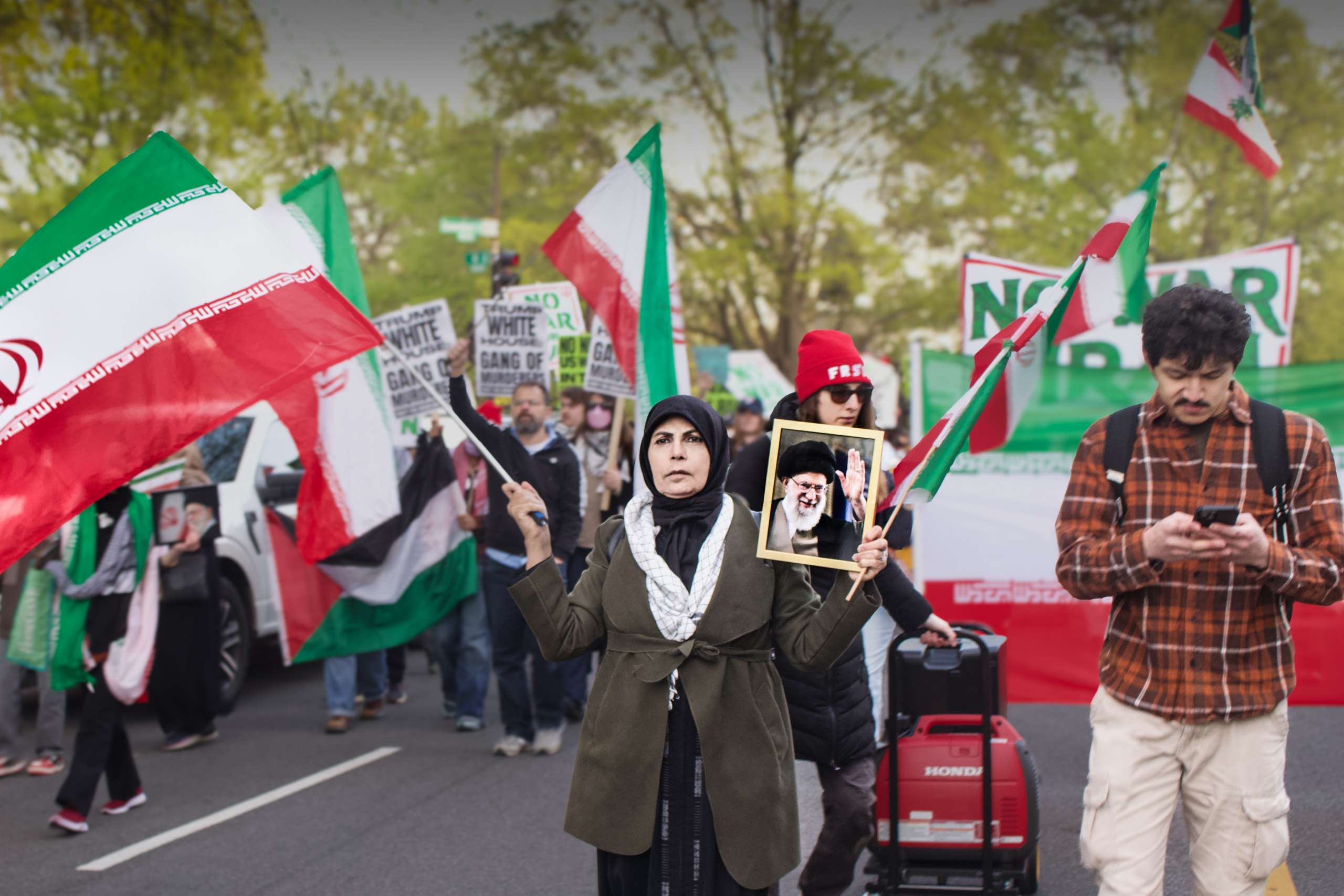
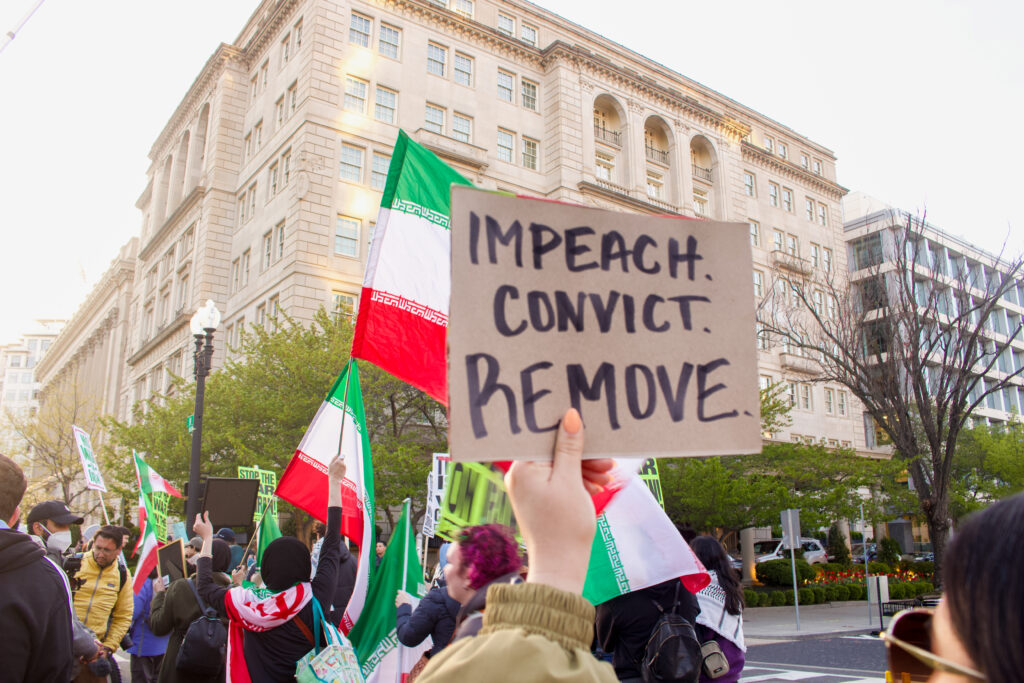
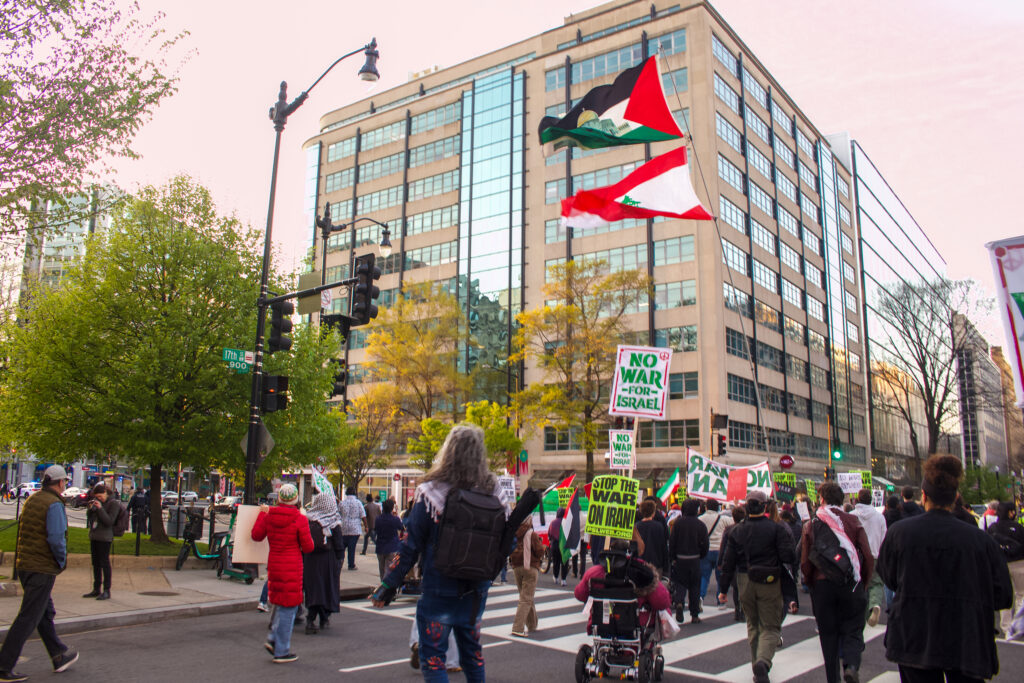
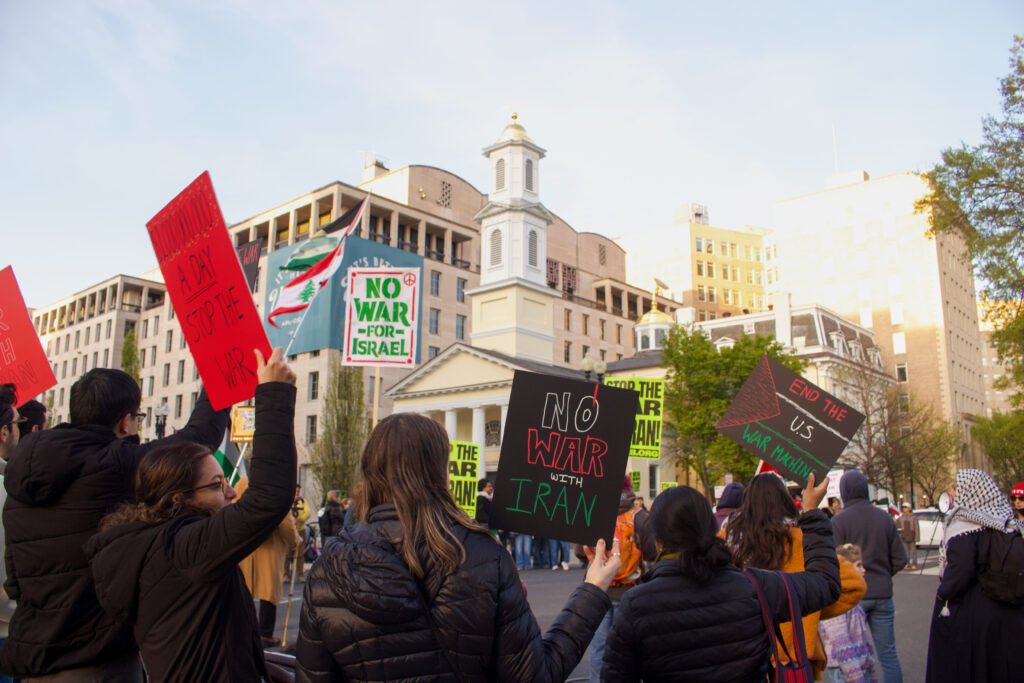
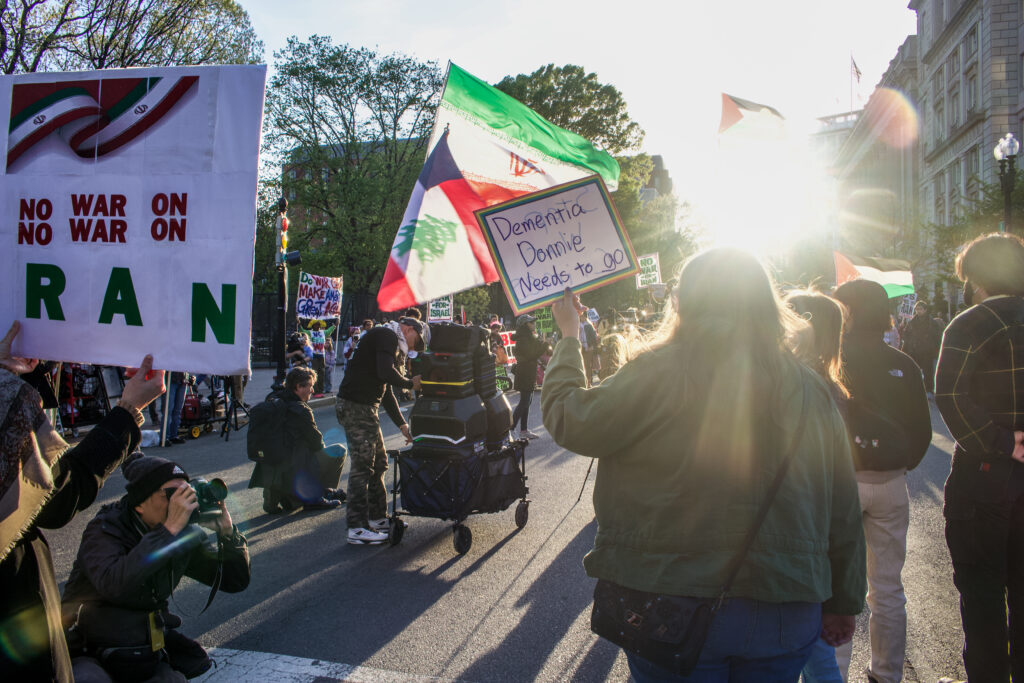
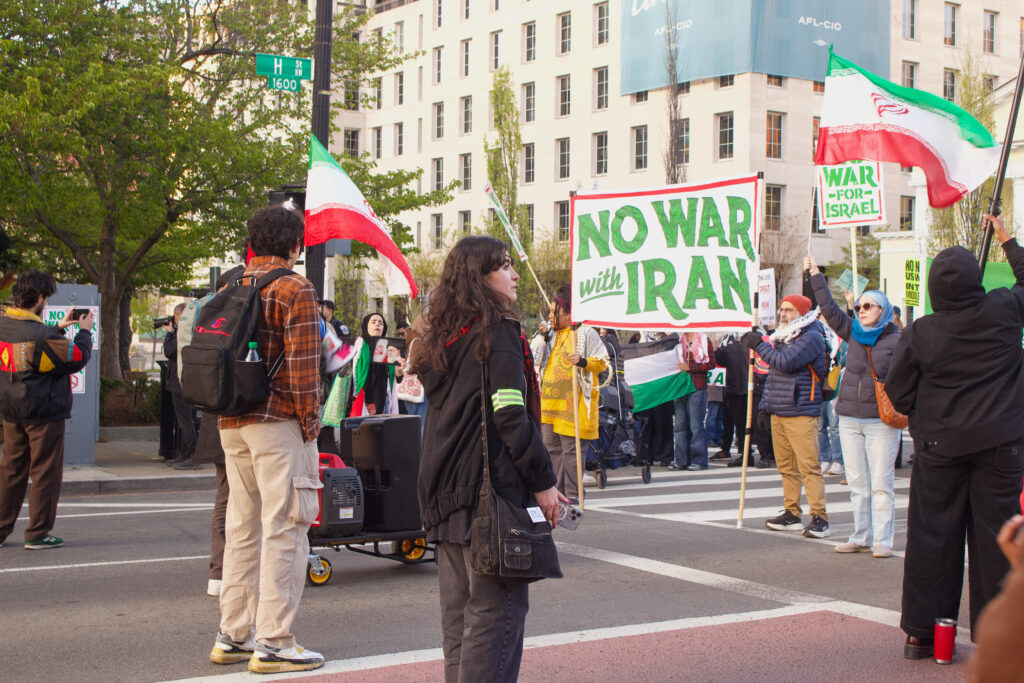
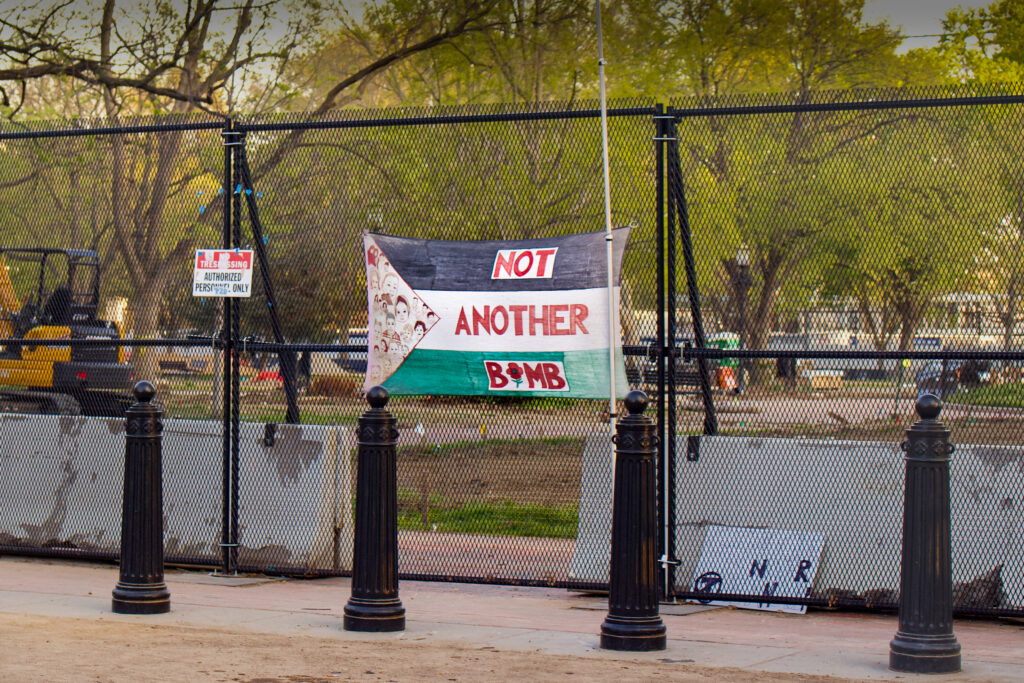
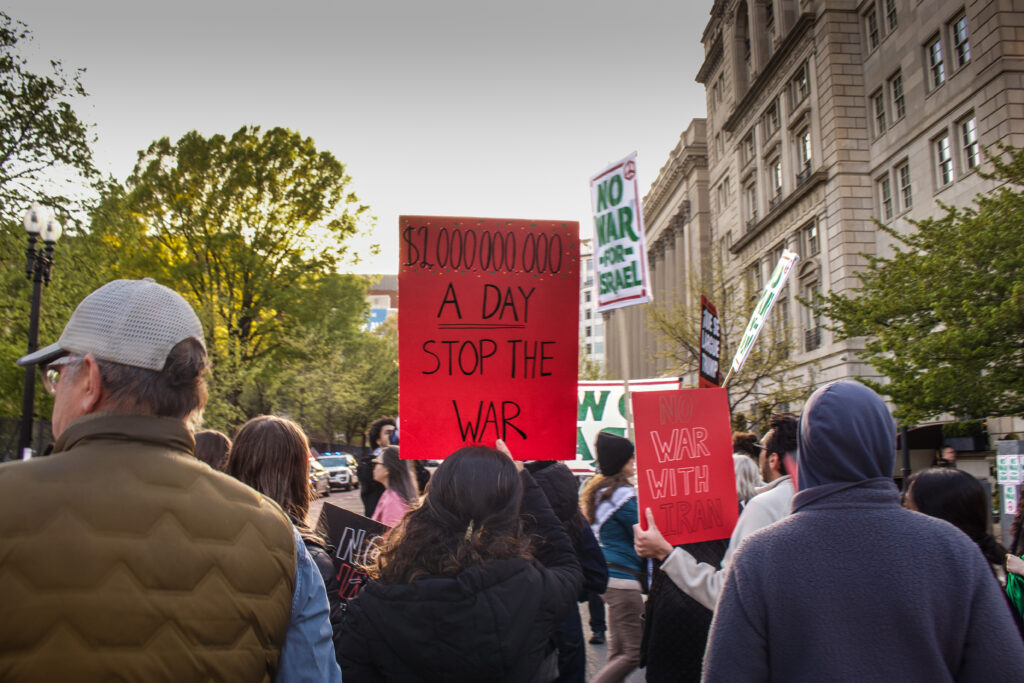
Protestors gathered outside the White House on April 8 to show their disapproval of ongoing war within the Middle East, demanding resolutions like an arms embargo and youth resistance to solve the region’s conflicts.
An arms embargo would prevent the sale, transfer or supply of arms and related materials to a specific country or group, according to the U.N. The D.C. chapter of the Party for Socialism and Liberalization organized the emergency rally alongside other organizations like the DMV Palestinian Youth Movement.
Protestors marched from the White House to Dupont Circle, carrying protest signs, Iranian flags and Palestinian flags. PSLDC and the National Iranian Council postponed what was originally intended to be a panel for a rally due to the U.S.-Israel ceasefire agreement with Iran.
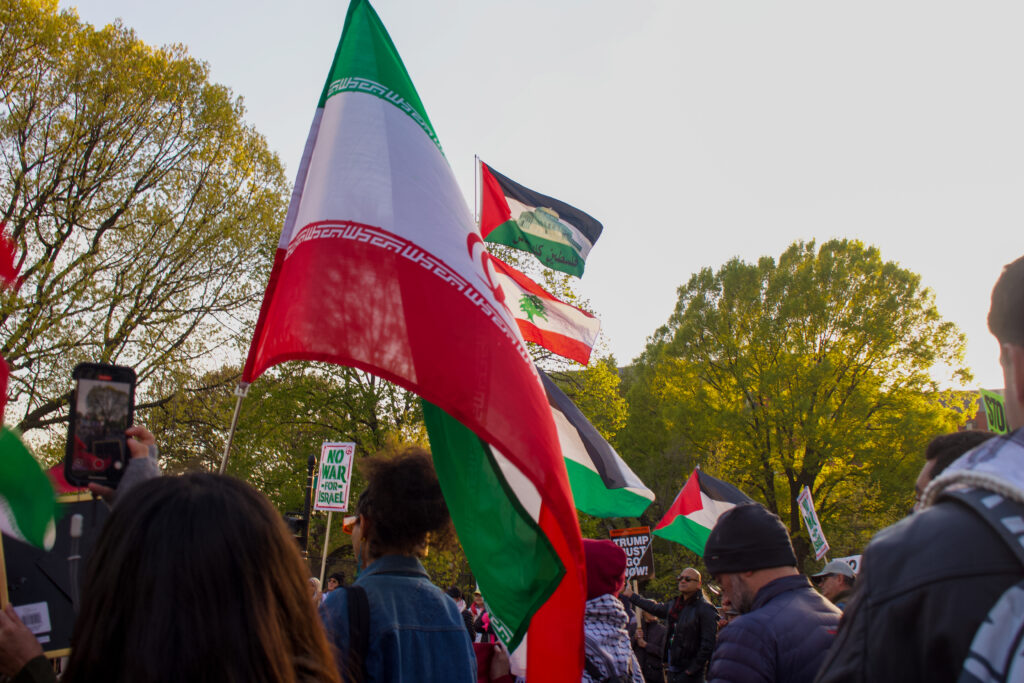
Pakistan facilitated the ceasefire on April 7. Shortly after the agreement, a U.S. ally, Israel, continued to attack Hezbollah targets in Lebanon, shaking up an already fragile resolution. Hezbollah is a Shia Islamic political party and militant group.
Miranda Dube, a PYM member, said that the U.S., world governments and companies must refuse to send military weapons to Israel as it “destabilizes every single country in the region.”
“We’re seeing that there will be no ceasefire unless there’s an arms embargo,” Dube said.
Dube said that an arms embargo is a possible solution that has historically contributed to revolution and liberation in different countries, like Spain refusing to allow ships carrying weapons to Israel to dock. An arms embargo against Israel can occur on the governmental level.
The PYM is also advocating for Virginia Retirement Systems, a retirement agency for Virginia’s public sector employees, to divest. Dube said that this would be an arms embargo and is possible because VRS has divested from South African Apartheid in the past.
“And that’s the way that you win these things…you have to hit them where it hurts, which is the pockets,” Dube said.
Sara Suleiman, a 27-year-old data scientist and PYM organizer, echoed the solution of an arms embargo on Israel. She said that when there is a ceasefire there isn’t really anything that will ensure it will hold, especially from the U.S. and Israel, who she called unreliable negotiators.
“How can we make sure these genocides never happen again? It’s to stop the flow of weapons,” Suleiman said.
Suleiman said that it’s everyone’s duty to fight increased fascism and oppression within the government.
“It’s up to the people to pressure the companies and the institutions to stop the flow of weapons to these genocidal entities like Israel,” Suleiman said. “And the U.S., which has been giving Israel weapons non-stop, the same bombs that are dropping on Gaza and now on Iran and Lebanon as well.”
Gail Speck, a 72-year-old retiree who has attended protests since the 1990s, believes that these issues did not begin with the recent administration and has hope that younger generations can make a difference.
“Well, we need a massive change. And I think this has been going on for years and years, and unfortunately, the U.S. has always been involved in wars for their own imperial interests,” Speck said.
Now, years later Speck proposes newer generations of students may be the answer.
“It’s not a simple solution, but I think it’s mainly young people that we have to hope will change things,” she said.