

UMD law class fosters hands-on learning, citizenship applications through workshop
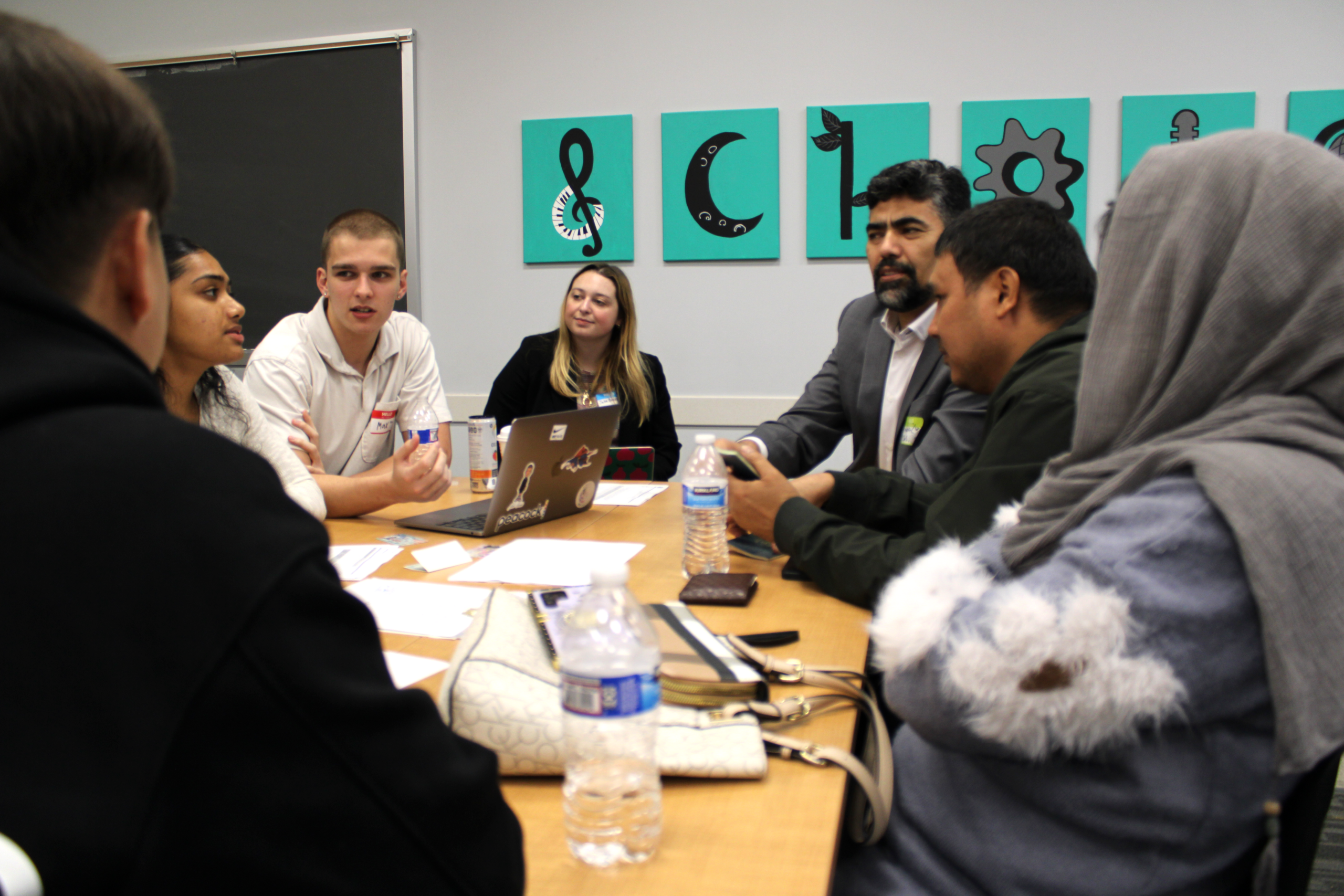
As the Supreme Court continues discussions around immigration, a University of Maryland undergraduate law program class tackles the history of birthright citizenship, combining classroom instruction with hands-on experience helping immigrants become naturalized.
MLAW315: Citizenship and Naturalization in America is a two-part course that first explores the legal history of citizenship and naturalization in the fall semester. In the spring, students complete a practicum where they design and execute a workshop to assist with citizenship applications, according to Grace Benton, the professor for the class.
The MLAW program operates in collaboration with the University of Maryland Francis King Carey School of Law, where Benton teaches. It gives undergraduate students an opportunity to explore their interests in law, an experience often reserved for postgraduate studies.
“It’s a really cool, extraordinary experience to have as an undergraduate,” Benton said. “I’ve heard from a lot of students that they felt it prepared them for law school or paralegal careers.”
The workshop started in 2021 when Solutions in Hometown Connections, a nonprofit organization based in Greenbelt, approached the college’s newly established Chacón Center for Immigrant Justice with the idea, Benton said.
On April 11, students in MLAW and students from Carey Law hosted the 5th annual workshop in the Cambridge Community Center to help people fill out naturalization forms. Volunteer attorneys were also present to assist with questions.
Claire Kilbourne, a junior government and politics major, said the workshop helped roughly a dozen people apply for naturalization this year in its morning session.
“It’s a bit different this year, adapting to the new requirements and changes. But in the past, we have helped over 65 people apply for citizenship,” Kilbourne said.
Kilbourne has noticed minor alterations to requirements and language in the forms under the Trump administration. These changes in the naturalization application represent the “behind-the-scenes” happenings, she said.
Benton adjusted her teaching to reflect the “profound implications for belonging, citizenship and access to these rights today.”
“The history of what it means to be an American, and citizenship and naturalization, is something that is subject to change,” Benton said. “I adjusted the syllabus for the legal history class almost weekly during fall 2025 because developments were unfolding that quickly.”
This workshop comes amid the Supreme Court’s review of birthright citizenship’s constitutionality. Birthright citizenship refers to the guarantee that everyone born in the United States is a U.S. citizen, according to the American Immigration Council. The nation’s highest court is expected to hand down a decision in late June or early July.
Cori Alonso-Yoder, an assistant professor of law and the director of the Immigration Clinic at Maryland Carey Law, said that the workshop served as a nice, warm and welcoming environment for people who may be feeling there is a certain hostility towards them.
“Many people are feeling very afraid and alienated, and that this clinic has continued to offer a service to the community now for many years, across political changes, I think is very reassuring,” Alonso-Yoder said.
Emily Johansson, a clinical teaching fellow at the University of Baltimore School of Law, echoed the sentiment, emphasizing that naturalization is important because it grants essential rights like voting. Johansson explained that some people don’t realize that having a green card is not enough to ensure immunity from deportation.
“People [are having] maybe a false sense of security that if they have a green card, they’re kind of like set and it’s cool, they don’t need to do anything else. But sadly, what we’re seeing so much during this administration is that a lot of people with green cards are having those taken away or getting put into removal proceedings.”
The effort to organize and host this workshop was “herculean,” Benton said. The workshop created a space for undergraduates to foster their professional growth in multiple ways.
“We help people fill out forms for a day, right?” Benton said. “But the planning that goes into it…all the credit is due to the students in this course.”