

Filipino student organizations mourn the 19 lives lost in Toboso deaths
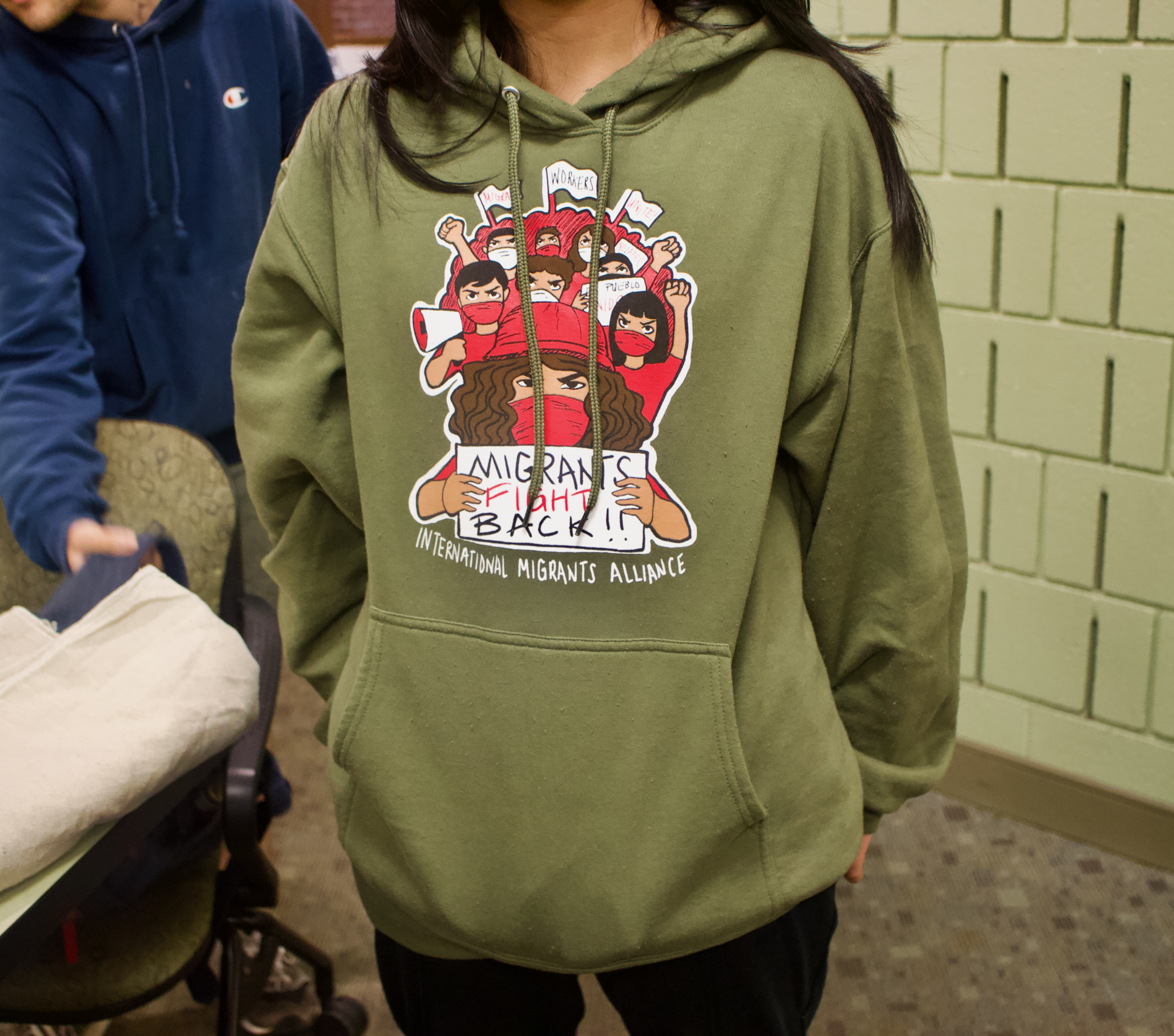
Student activists and advocacy organizations gathered on April 28 to honor lost Filipino lives and demand accountability.
The University of Maryland Committee for Human Rights in the Philippines, or TerpCHRP, the Filipino Cultural Association and Anakbayan College Park hosted a town hall at the School of Public Policy titled “Defend Migrants Townhall.”
The event spotlighted the growing push by activists to protect the rights and safety of Filipino seafarers and to honor the lives lost in an April encounter between the Armed Forces of the Philippines and
It spotlighted the growing push to protect the rights and safety of Filipino seafarers and to honor the lives lost in an April encounter with the Armed Forces of the Philippines.
On April 19, the Armed Forces of the Philippines killed 19 individuals in the town of Toboso in Negros Occidental province.
The armed forces claim that the daylong operation targeted members of the New People’s Army — the armed branch of the Communist Party of the Philippines — and all 19 deaths were combatants. The Communist Party of the Philippines claims that nine of the dead were unarmed non-combatants.
Among the victims were two U.S citizens, 40-year-old Lyle Prijoles and 26-year-old Kai Dana-Reme Sorem. Prijoles was from San Diego, California, and was a founding member of Anakbayan College Park’s parent organization, Anakbayan-US, a joint democratic mass organization of Filipino youth and U.S students. Sorem, an artist and youth activist from Steilacoom, Washington, was a co-founder of Anakbayan South Seattle.
Some speakers at the town hall said the deaths escalated terror among activists tied to work in the Philippines.
“It sucks to have martyrs,” said Julian Hurst, the chair of TerpCHRP and a freshman physics major. “Everyone in the room could kind of feel that.”
Rio Gutierrez, a senior public health major and the chairperson of Anakbayan College Park, said that Filipino Americans have a responsibility to raise awareness on the events happening in the Philippines.
“We, as Filipino people here in the U.S., have the voice that they don’t have, and we can make sure that a lot of other people are given this information so that they can support the Filipino people as well,” Gutierrez said.
The Human Rights Watch, a non-government organization that investigates and defends human rights in upwards of 100 countries, reported in its 2026 World Report that the Philippines President Ferdinand Marcos Jr. failed to condemn ongoing harassment, intimidation and killings of government critics by armed Philippine forces.
Students at the town hall said the deaths reflect a broader pattern of intimidation and violence, urging U.S. organizations to speak up.
“The Philippine government is literally trying to suppress our voices, and if we don’t take action and make sure that people all around the world know what the Filipino people are experiencing, then our revolution won’t keep going,” Gutierrez said.
Student advocacy groups are continuing outreach efforts through town halls, vigils, press outreach and building coalitions with other campus advocacy organizations, according to various members.
Kian Valenzuela, a senior biology major and member of the Filipino Cultural Association, said student organizations are also working to fight the negative effects of assimilation on Filipino Americans on campus.
“It is very important for us to not only know what is going on back home in the Philippines, but also learn more about our culture,” they said.
Valenzuela said organizers hope to increase accessibility to conversations regarding political violence and human rights in the Philippines.
“How do we not [only] educate but bring awareness to students that have never learned about this before, or have never heard about this before?” Valenzuela said.