

This machine cleans algae blooms that could harm the Chesapeake Bay
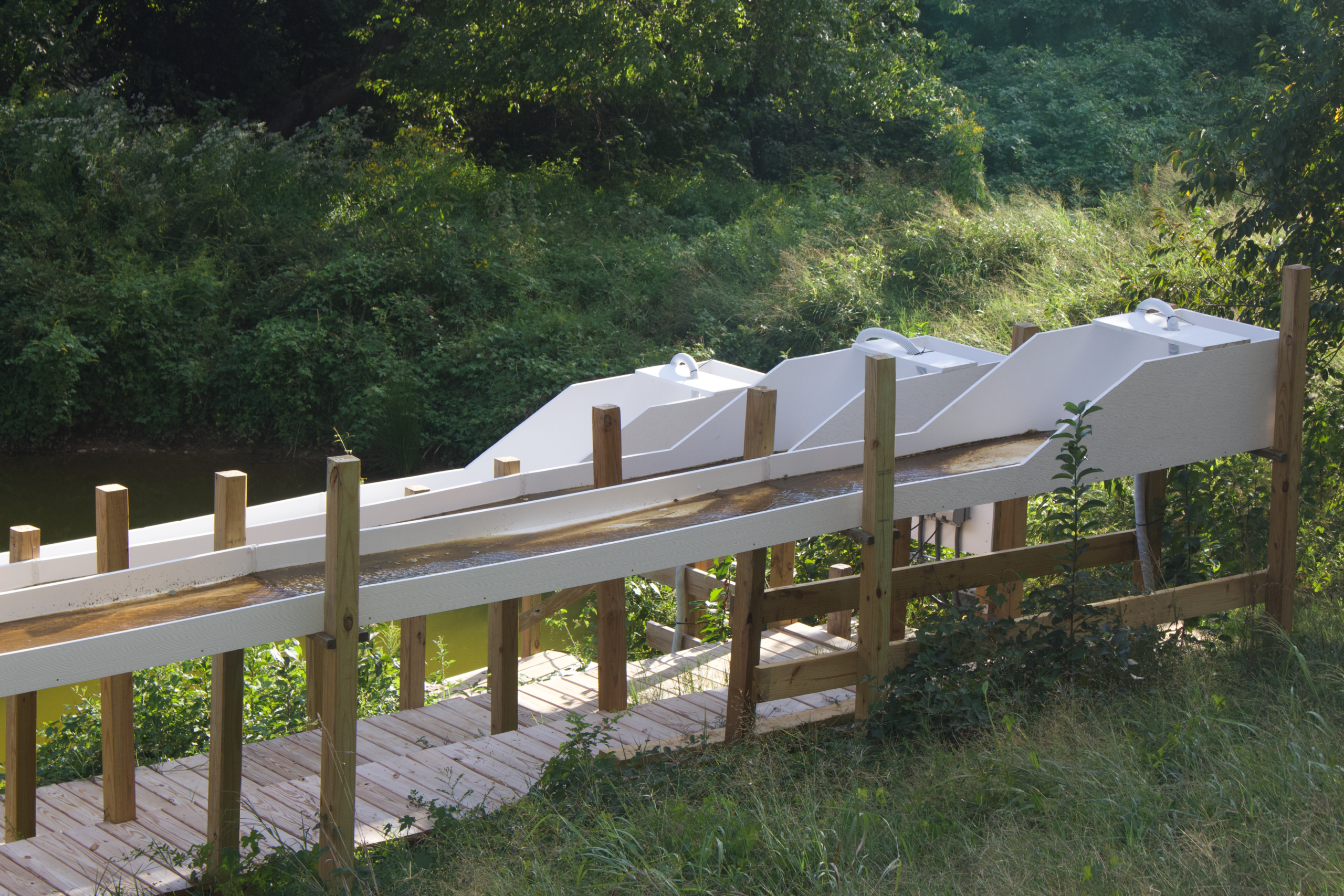
When commuters in Terrapin Trail Garage lock their doors, grab their bags and walk out the exit, they are greeted by the sound of dripping.
That sound, which usually would be a commuter’s worst nightmare, is actually a long machine moving water from a nearby pond known for housing turtles and geese throughout the school year.
Students in the University of Maryland’s Environmental Science and Technology program have slowly been building the machine known as the Algal “Terp” Scrubber since last fall. The scrubber, made of wooden planks, plastic tubes and slides, works with its algae-trapping technology in an effort to clean the stormwater pond of excess algae, promoting long-term environmental sustainability and scientific innovation, according to Peter May, an assistant professor at the university’s Department of Environmental Science and Technology.
The scrubber uses three flow paths that filter the pond’s water while leaving its animal and plant life unharmed. During the filtering process, the system captures the excess algae and holds it until it is cleaned, according to May.
May taught the course where senior students researched and built the algal scrubber. This year, he will teach a new group of students how to maintain the scrubber and research new uses for algae.
Algal scrubbing technology is relatively new to Maryland, with the state having two scrubbers, according to May: one at Bladensburg Waterfront Park, while another remains at the university, both are in bodies of water known for algae blooms that harm the Chesapeake Bay.
During rain showers, water carries important algae-growing nutrients like nitrogen and phosphorus from streets, fertilizers and pet waste into stormwater ponds. The water then moves from smaller watersheds to larger ones until it reaches the Chesapeake Bay and flows to the Atlantic Ocean, fueling algae growth every step of the way.
While a certain amount of algae is good for freshwater and saltwater waterways, too much algae destroys ecosystems by removing oxygen from the water, suffocating fish, crabs, oysters and other aquatic life.
May said his students found new uses for the algae collected by the scrubbers, turning it into firewood and paper and mixing it into building materials like concrete. He and his students also mixed algae into soil as a fertilizer to grow vegetables like lettuce.
May works closely with his former student and Maryland alum, Larry Davis, and his company, GreenMechanics, which builds and modifies algal scrubbers. Davis wrote the building proposal for the algal scrubber at Maryland when he was a senior, explaining the environmental and scientific innovations that it could bring.
Davis and his peers submitted their proposal to build the scrubber in 2019, but the pandemic delayed it. Finding a pond on campus on land where the university would not build took time.
The building began last year and slowly came together through the spring. May said that, thanks to a grant, the algal scrubber will operate for five years, cleaning the pond and helping clean the Chesapeake Bay.