

A look into UMD’s Divine Nine sororities
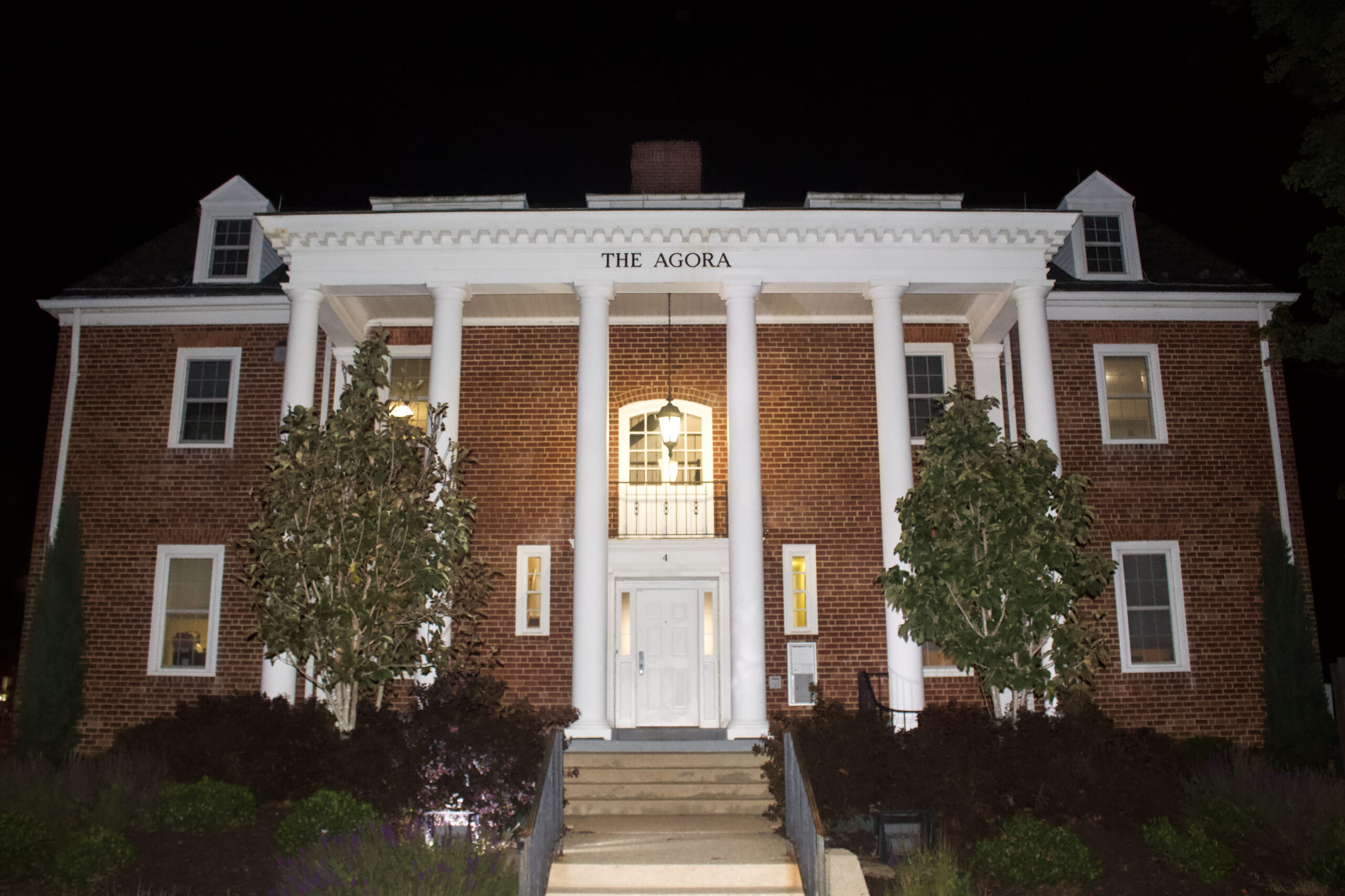
The University of Maryland is home to four Divine Nine sororities, where years of history and tradition meet a new generation of students.
The National Pan-Hellenic Council, commonly known as the Divine Nine, is composed of nine historically Black Greek-letter organizations. At UMD, Alpha Kappa Alpha Sorority Inc., Delta Sigma Theta Sorority Inc., Sigma Gamma Rho Sorority Inc. and Zeta Phi Beta Sorority Inc. each carry their own story, with identities shaped by history, service, sisterhood and purpose.
Here’s a closer look at the four sororities, its chapters and the work they’re doing on campus.
Theta Nu Chapter – Alpha Kappa Alpha Sorority Inc.
The Alpha Kappa Alpha Sorority Inc. was founded at Howard University in 1908, making it the oldest Black Greek-letter sorority. Decades later, UMD established its own Theta Nu Chapter in March of 1974, bringing that legacy to College Park.
The organization built its foundation off of service, sisterhood and scholarship. Today, those principles remain true to the chapter’s mission as it aims to advance the community and create a progressive society.
For chapter president Anika Bennett, that commitment to service remains a large part of Theta Nu’s work. This year the chapter plans to host events focused on mental health, hazing prevention, self-care and relationship building.
The chapter has also organized a breast cancer walk fundraiser and participates in community service efforts such as clothing drives. According to Bennett, the chapter raised more than $4,000 for breast cancer awareness last year.
Additionally, Theta Nu’s programming reflects its focus on making educational topics engaging. Last semester, the chapter hosted programs on how to advocate for change in today’s political climate and alcohol awareness. During finals season, the chapter held a mental health program that gave students the opportunity to discuss stress and create their own stress balls.
Bennett notes that the chapter aims to present informative programs in a fun way, rather than making participants feel as if they’re being lectured.
Bennett, a senior journalism student, said Alpha Kappa Alpha is looking to continue expanding through its initiatives. “A goal is obviously to build our chapter this year and continue to have a strong presence,” she said.
Bennett said she hopes the chapter will become more accessible and visible to students at the university through its community outreach. She added that the Divine Nine has the opportunity to build on its history and work together to create a greater impact amongst the campus community.
“The Divine Nine as a whole, even though we’re in different organizations and have different letters…the overall community impact that we can do when we all work together is really unmatched,” Bennett said.
Kappa Phi Chapter – Delta Sigma Theta
The Delta Sigma Theta Sorority Inc. was founded in 1913 by 22 women at Howard University. In January of 1974, UMD chartered its own Kappa Phi chapter.
The organization was founded on the principles of constructive development among its members and public service with a focus primarily on the Black community. Although those same ideals remain true, the chapter has expanded its focus on scholarship, social action, sisterhood and service.
Delta Sigma Theta’s programming supports those key themes by offering voter education, community service initiatives and scholarship opportunities. Vice President Trinity Smith said the chapter’s intentional approach to programming to ensure each initiative serves a specific purpose is what distinguishes Kappa Phi.
“I feel like each of ours has a targeted, specific goal, and the way we educate our community, I feel that is what makes Kappa Phi unique,” Smith said.
Voter education serves as an example of one of the chapter’s main concentrations. In October, Delta Sigma Theta plans to host voter registration and informational events, one specifically in collaboration with the Prince George’s County Alumni Chapter. Smith said the intent of these events is to help students understand the registration process.
“That’s what we’re trying to do, inform the students about what’s going on, inform them on how they can register, the easiest way for them to vote and get them excited about civic engagement,” Smith said.
The Kappa Phi Chapter also offers two scholarship opportunities, the Jerilynn Reid Technological Scholarship and the Hope Patterson Community Service Memorial Scholarship, which apply specifically to minority undergraduate women. Events such as Study-athon, Exam Cram and Dine with the Deltas serve as fundraisers to help support those scholarship funds.
Delta Sigma Theta plans to host Candid Conversations in October, an event which is concentrated on healthy and toxic relationships in observance of Domestic Violence Awareness Month.
The chapter’s service extends beyond the campus, with Kappa Phi participating in an annual St. Jude walk at the National Harbor.
Together, these programs represent Kappa Phi’s goal of impacting the university and the broader community. Smith notes the chapter hopes to represent Black women pursuing educational success and leadership while aiming to address issues that affect society beyond campus.
“There are power in our voices, and the goal of the Kappa Phi chapter is to prioritize and highlight the voices of that minority,” Smith said.
Eta Beta Chapter – Sigma Gamma Rho Sorority Inc.
The Sigma Gamma Rho Sorority, Inc., the last organization added to the Divine Nine, was founded in 1922 at Butler University, a predominantly white institution, serving as the only NPHC sorority not founded at an HBCU, such as Howard University.
The University of Maryland chartered its own Eta Beta chapter in April of 1976, with the intention of using service to enhance the lives of women and their families. The chapter was created to advance education, health awareness and leadership development.
Today, those values continue to shape Sigma Gamma Rho’s work on campus. Historian Aubrey Ross said service remains one of the chapter’s main traditions.
“I would say some major traditions, starting with service, we participate in Good Neighbor Day and Lieutenant Collins Day of Service every year,” she said.
Ross added that Eta Beta annually serves at Shepherd’s Table, a nonprofit supporting people experiencing poverty, homelessness and food insecurity.
The chapter’s programming targets education and interactivity in its work. Its Higher Destination event brings middle and high school students to the university for a campus tour and a panel discussion with Eta Beta members.
The chapter hosted 16 events last semester, including a Get Ready With Us series featuring interactive workshops on hair and makeup.
As a smaller chapter, Sigma Gamma Rho is working to increase its visibility on campus.
“A big focus for this school year is visibility because we are a smaller chapter,” President Manuela Ndiong said. “So, just gaining more visibility through our initiatives, and then through that, finding more people that are interested with us to collaborate.”
As the chapter grows, Ross said its ability to serve its community grows with it. She pointed to Eta Beta’s six members and around 164 service hours.
“I feel like as the chapter grows, we’re able to give back to the community more, and our service hours increase,” Ross said.
Those aspects of service and community are also reflected in Eta Beta being a member of the Divine Nine. Ndiong said Sigma Gamma Rho’s history as a sorority founded at a predominantly white institution gives the chapter a unique connection to students searching for community at a PWI.
“I think for us uniquely, because we were founded at a PWI, we have that connection with the fact that we wanted to find people similar to us, whether it was our skin color or our ideologies,” Ndiong said.
Eta Epsilon Chapter – Zeta Phi Beta Sorority Inc.
The Zeta Phi Beta Sorority Inc. was founded in January of 1920 at Howard University.
The Eta Epsilon chapter became the first sorority of the NPHC chartered at the university in October of 1973. The organization was founded on the principles of promoting education, community service, sisterhood and the development of women.
After being inactive for several years, the chapter reactivated in 2022 and has since focused on rebuilding its presence on campus through programming, service and community involvement. President Janasia Thomas said creating a welcoming environment is an important goal within Zeta Phi Beta.
“Before I joined the chapter, I feel like one thing that I saw was how welcoming everybody in the chapter was. It generally felt like home,” Thomas said.
The chapter’s approach to programming and service also reflects that welcoming environment. Eta Epsilon has participated in sustainability initiatives, campus cleanups, volunteered at food banks and taken part in service events in partnership with other NPHC organizations.
Thomas, a senior neuroscience student said the chapter hopes to move beyond traditional service and continue developing service opportunities that respond to different community needs.
“My goal is to have more creative service,” Thomas said. “I want to maybe focus on different groups of people, and also see what does the community really need, like what service do we really need.”
This year, Eta Epsilon is looking to create an inclusive space for students on campus. The chapter wants to ensure students’ voices are heard and represented through its programming.
“We really want to create a space, especially this year, for all the Black students on campus and students, honestly, from any disadvantaged background to just feel included and have a space where they can feel heard,” Thomas said.
The chapter also plans to use its programming to address topics that may receive less attention on campus. For Thomas, this includes the creation of panels focused on neurodiversity and maternal health as a part of its efforts to educate the community.
As for the Eta Epsilon chapter of Zeta Phi Beta, those efforts reflect the chapter’s broader goal of using its presence on campus to serve and connect with the community.