

Do you know Africa’s premier diva?
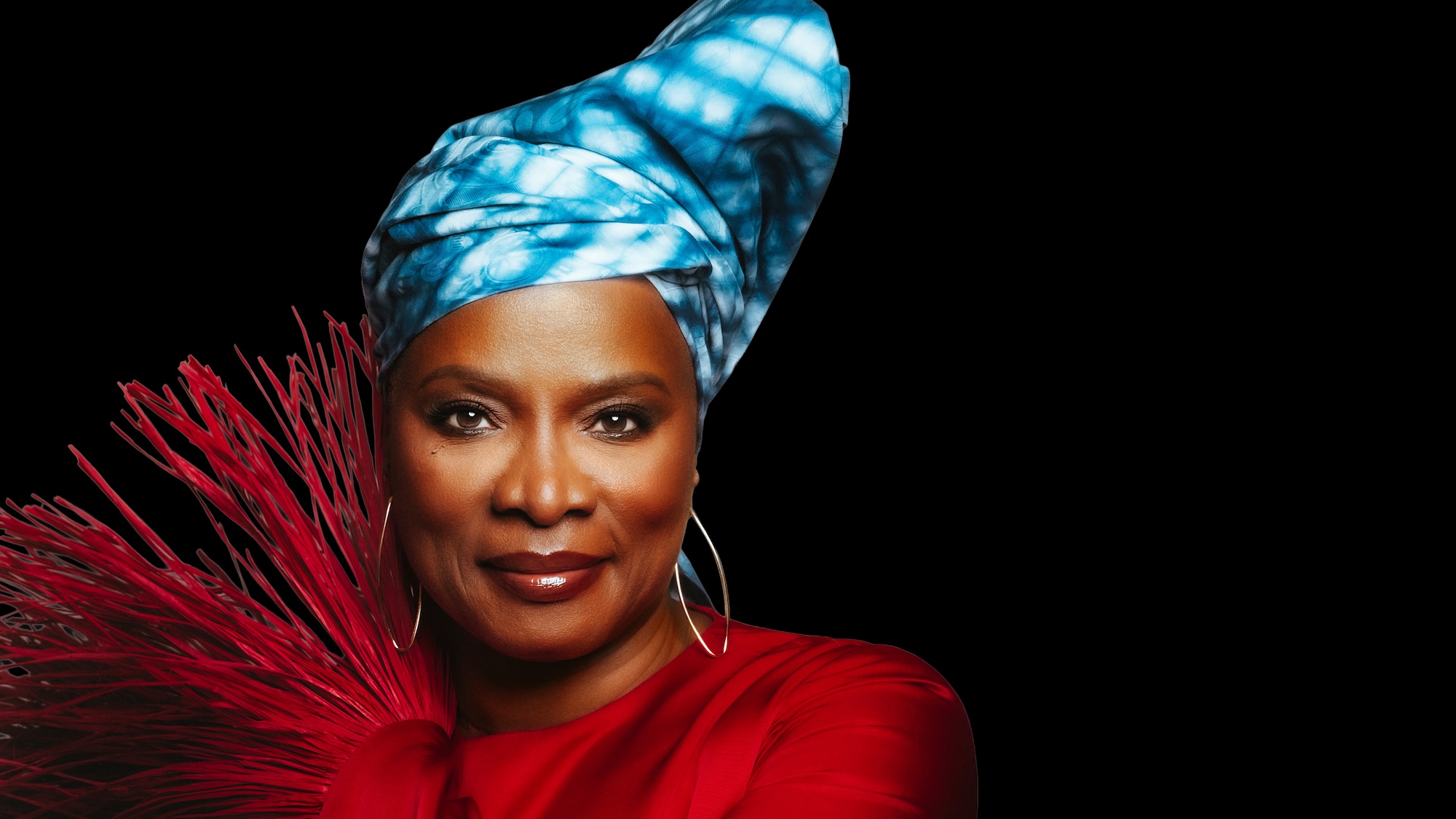
Five-time Grammy-winning Beninese singer and UNICEF Goodwill Ambassador, Angelique Kidjo, joined Stephanie Shonekan, Dean of Arts and Humanities, on Monday night at the Dekelboum Concert Hall at the University of Maryland.
During Shonekan’s introduction of Kidjo, she called Kidjo Africa’s Premier Diva, referring to a 2007 TIME profile of the singer. In the article, TIME journalist Alex Perry recalled how five thousand people gathered to watch Kidjo perform at the 2006 Harare International Festival of the Arts in Zimbabwe.
In the middle of performing, Kidjo walked to the front of the stage and condemned the country’s then-president, Robert Mugabe, for “burning his own country and abducting his own people.” She did so at the risk of being “deported, jailed, even killed,” according to the article.
Men from Mugabe’s Central Intelligence Organization ran through the crowd toward Kidjo. Concertgoers responded by cheering and blocking their path, giving her time to escape, Perry wrote.
It was clear, according to Perry, that the “Africa premier diva” crown was one she did not wear lightly.
Twenty years later, she stood before another audience, this time at the Clarice Center for Performing Arts.
“Music has always been my place of comfort, my place of safety… when I’m on stage, I’m fearless,” Kidjo told the audience.
She sauntered on stage wearing an elegant black dress with a vibrantly colored cropped jacket. A light brown headscarf wrapped into a shape that resembled a crown. As Kidjo moved her body animatedly, the gold side arms of her dark glasses and gold heels caught the warm spotlight.
Her titillating stories kept the room light. In one moment, she recalled how her brothers teased her size, saying they could put her in their pocket. Her reply was, “I’ll bite your thigh,” drawing laughter from the audience and herself.
“She carries so much aura,” Ginikachi Anierobi, a kinesiology senior at the university and pianist, said. Growing up in an African society, Anierobi, a Nigerian, felt that women are subjected to a box of who they can be. Kidjo redefines the narrative for her.
“What she does is really inspiring, not only to her generation but to the younger generation to stand for something positive,” Anierobi said.
The event was part of an annual free lecture series hosted by Shonekan, a professor of ethnomusicology, who described herself as a long-term fan of Kidjo. She said that she invited the singer because of Kidjo’s unapologetic approach to being herself and dedication to the arts.
“She’s done a lot for young women and girls. It always impresses me when an artist…chooses to also do incredible work for others. I put a person like Dolly Parton in that same realm,” Shonekan said in a Zoom interview with the Black Explosion.
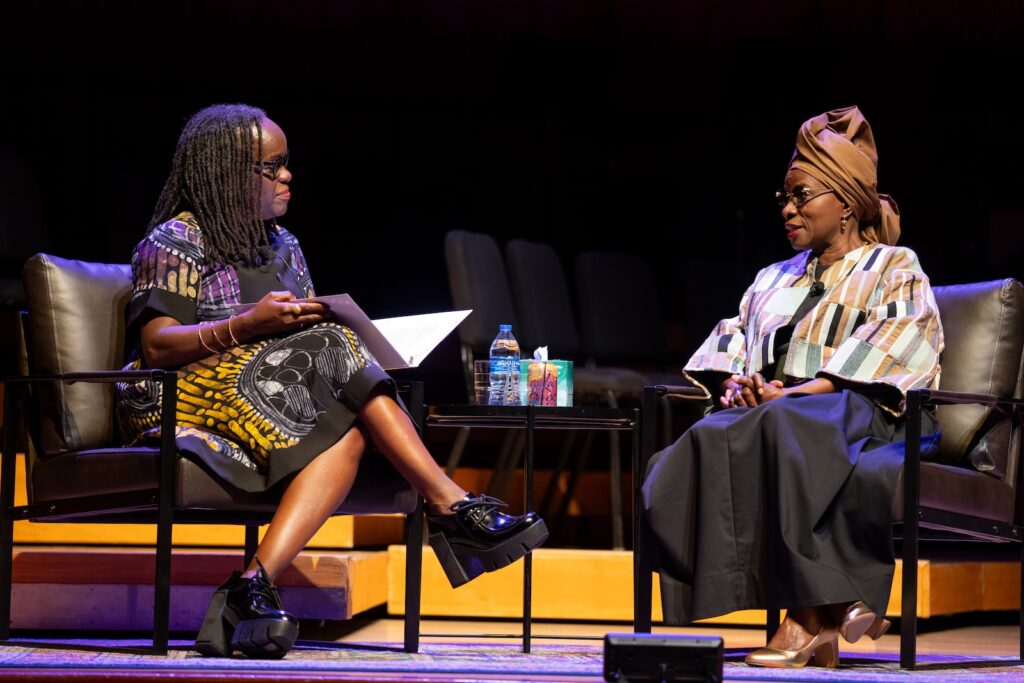
Kidjo, who flew in from France the previous night, recounted lessons from a life shaped by a love of music, activism and her identity as an African woman. Since she debuted in 1981, Kidjo has released 18 albums across genres such as afrobeat, pop, r&b and hip-hop. Her most recent album “HOPE!!,” released this April.
With this album, Kidjo shares the importance of hope in our collective present and future.
“We are living in a very challenging time… In chaos, there’s hope. We have to use it to protect our mental health, our emotions and decide how we’re gonna drive our lives,” Kidjo said.
Born in 1960, Kidjo grew up as the seventh of ten children she said onstage. Her parents encouraged them to write, read books, ask questions and learn about other cultures. She described herself as a child who asked questions until she understood.
“My father always used to say, ‘Inform yourself because information…allows you to see and to understand what has come before, what is now and what might come after,’” Kidjo said.
According to Kidjo, one needs to know at least two languages to get by in Benin. She speaks five languages: Mina, French, Yorùbá, English and Fon. Kidjo sings in each language, switching fluidly between words. She explained that when somebody has a musical ear, it’s easy for them to learn a language.
As a child, Kidjo was questioned why Benin’s 50 indigenous languages were not taught in schools, instead learning what she described as a history and language shaped by their colonizers. Music and songwriting became one way to reclaim authority over her story and contribute to a collective history.
“Language and music have one thing in common: the emotion that it brings,” Kidjo said.
Students from the School of Theatre and Performance Studies honored Kidjo with a fluid hip-hop dance to “Bando,” a collaboration between Pharrell Williams and Quavo.
Hannah Jackson, a second-year master’s student at the School of Music with a background in gospel music,paid tribute to the 66-year-old musician with a rendition of “Malaïka,” which Kidjo recorded in 1991. Accompanied by the University of Maryland Symphony Orchestra,Jackson earned roughly 30 seconds of applause with most of the audience standing.
When Shonekan approached Jackson a month ago about performing at the event, Jackson was admittedly unfamiliar with Kidjo’s music and life. But she soon found familiarity in Kidjo, saying the singer reminded her of one of her aunties.
“I really appreciated her sentiments about hope in her artistry but also her dedication to fighting for justice in the world,” Jackson said.