

UMD Clothesline Project adds 30 shirts to display confronting sexual violence and relationship abuse
Content Warning: This article contains language and imagery discussing incest, domestic, sexual and power-based violence.
According to the Men’s Rape Prevention Project, “58,000 soldiers died in the Vietnam War. During that same period of time, 51,000 women were killed mostly by men who supposedly loved them.”
The Clothesline Project was created by women’s groups on Cape Cod, Massachusetts, who heard this statistic and wanted to bring awareness to violence against women.
It was artist Rachel Carey-Harper’s idea to visualize this using shirts hung along a clothesline.
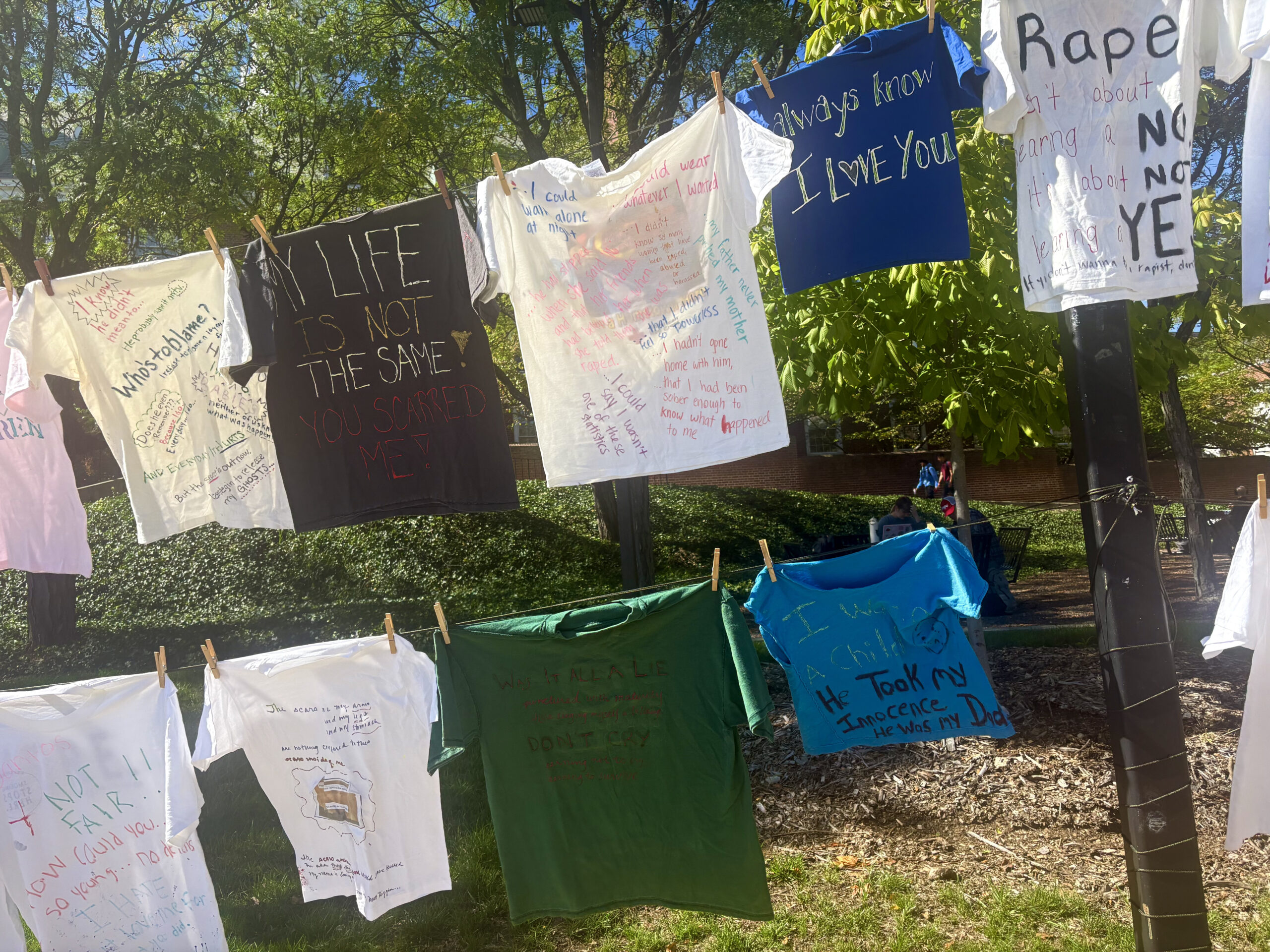
CARE to Stop Violence organized the Clothesline Project at the University of Maryland’s Hornbake Plaza on Oct. 7 from 11 a.m. to 3 p.m.
At UMD, the Clothesline Project is held biannually, once in October during Domestic Violence Awareness Month and another in April during Sexual Assault Awareness Month.
According to the Rape, Abuse & Incest National Network, the largest anti-sexual violence organization in the United States, an estimated 443,634 rapes and sexual assaults against people age 12 and older occur annually in the U.S
“The campus community is invited to create a shirt to share their experience or show their support for survivors,” said Grace Fansler Boudreau, the program director of CARE to Stop Violence.
Students could read messages left on shirts reflecting the emotional impacts of violence. The shirts depict a variety of thoughts and emotions, ranging from messages of hope to statements of rage.
“[There were] some cases where I felt uncomfortable, and the guy didn’t care; just kept going. … There was one shirt that said, ‘It’s not about hearing a no; it’s about not hearing a yes,’ and I really agree with that,” said a spectator.
“Giving [survivors] a safe space is like the first and most important step so that they can come forward and share what they are feeling without any feeling of shame,” said Shreya Gupta, a second-year master’s student in applied economics.