

Memory and storytelling in Mr. Burns: A post-electric play
Imagine a post-apocalyptic world with no technology, no electricity and no reliable means of communication. Everyone you know and love is either missing or dead, and you have to recall everything from memory. Then, years after the apocalypse, you and your friends travel across the country, delivering remembered moments from pop culture that take on new meaning with every retelling.
That’s the premise of “Mr. Burns: A Post-Electric Play,” directed by Elizabeth Dinkova, the artistic director of the Spooky Action Theater in Washington, D.C., and performed by the School of Theatre, Dance and Performance Studies on Oct. 9, 10, 15, 16 and 18 at the Kay Theatre at the Clarice Smith Performing Arts Center at the University of Maryland.
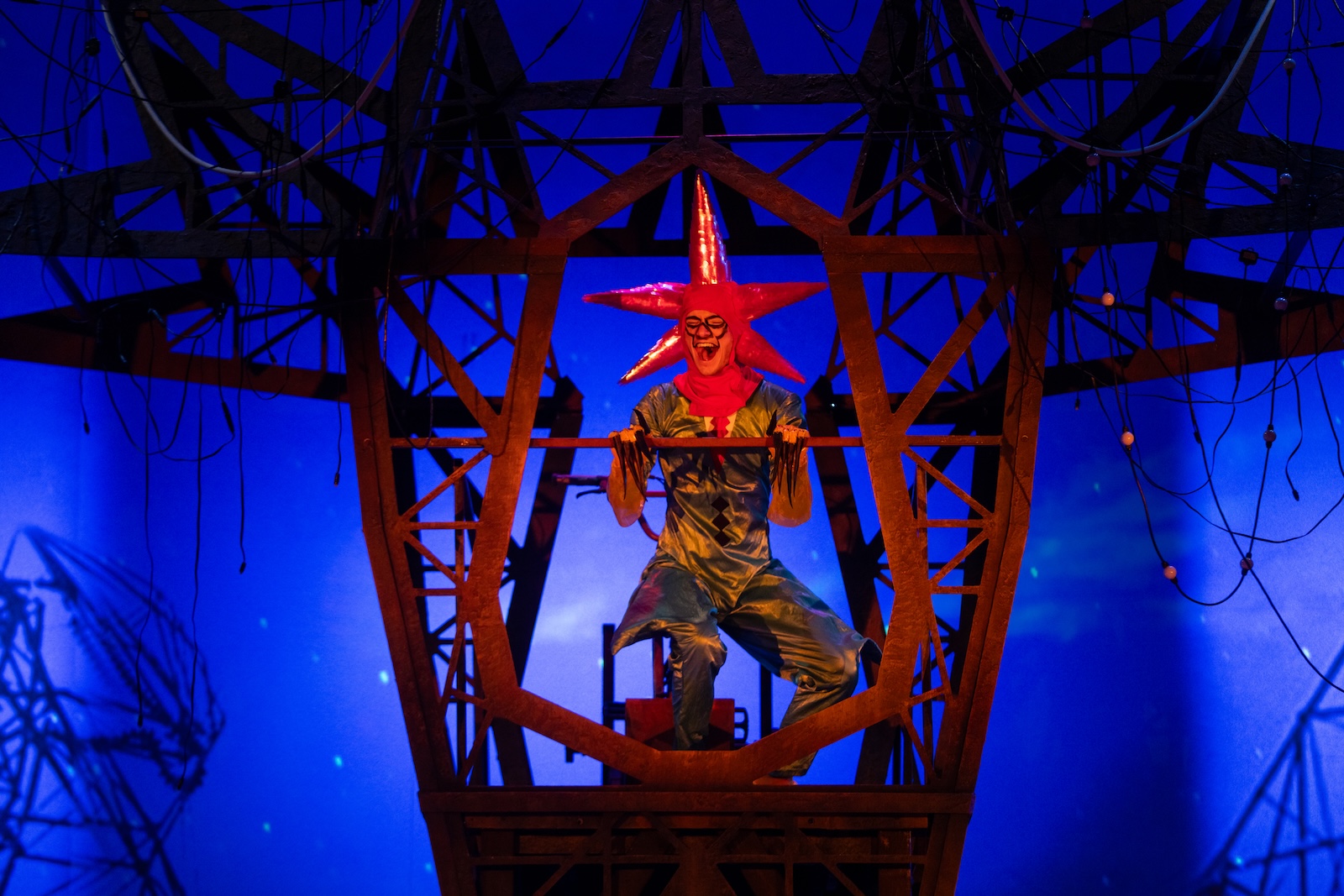
The play was shown in three acts. Act 1 shows a group of survivors in Carroll County, Maryland, attempting to recall the events of “Cape Feare,” an episode of “The Simpsons” in which the family’s only son, Bart, receives a series of death threats from a violent clown named Sideshow Bob. Act 2 shows that same group (plus one) seven years after the disaster as a traveling theatre troupe, who recreates that episode and other moments in pop culture from memory and audience tips. Act 3 replaces the theatre troupe with a dramatic musical retelling of “Cape Feare” 75 years later, giving the episode an entirely different meaning.
At the end of the “Mr. Burns” showing on Oct. 16, the audience had a chance to talk with three of its cast members: Amelia du Bois, (Colleen, Willy, Scratchy), Christian Patiag (Sam, Nelson, Bart) and Keegan Perry (Gibson, Apu, Mr. Burns). Audience members asked the trio about their favorite part of production, their hardest moment on set, and how they each dealt with their characters’ internal struggles. At the end of each response, they reiterated their gratitude for working on “Mr. Burns” together, stating the audience would understand the play better if everyone on set loves what they’re doing.
This statement rang true. Du Bois, Patiag, Perry and the rest of the cast were so committed to their roles that the dialogue was difficult to understand at times. However, they conveyed the story through emotion, which made up for its complexity. Another enjoyable aspect of “Mr. Burns” was the gradual incorporation of musical numbers. Act 3 was especially impressive; every actor delivered their lines with passion, and their vocals stayed consistent throughout the act.
Aside from the actors’ dedication to the story, the visual effects captured the audience’s attention before the play even started. During the 30-minute pre-show, about 25 televisions of different sizes displayed distorted scenes from various episodes, providing context for those unfamiliar with “The Simpsons.” In Act 1, as the survivors remember the episode, the scenes they’re trying to recreate faintly appear in the background, which was excellent attention to detail.
Overall, “Mr. Burns” tells the story of what happens when people are forced to rely on their memories for entertainment, and how retelling those stories affects how they’re told in the future. Everyone put on a great performance, and TPDS has many more events to come in the 2026-2027 season, like the Kreativity Diversity Troupe Open Mic Night on Oct. 23 and the Fall M.F.A Dance Thesis Concert on Oct. 30 and 31.