

Ethiopian famine documentary highlights the making of We Are the World
Editor’s Note: Sophia Parkins is the photo editor for The Black Explosion.
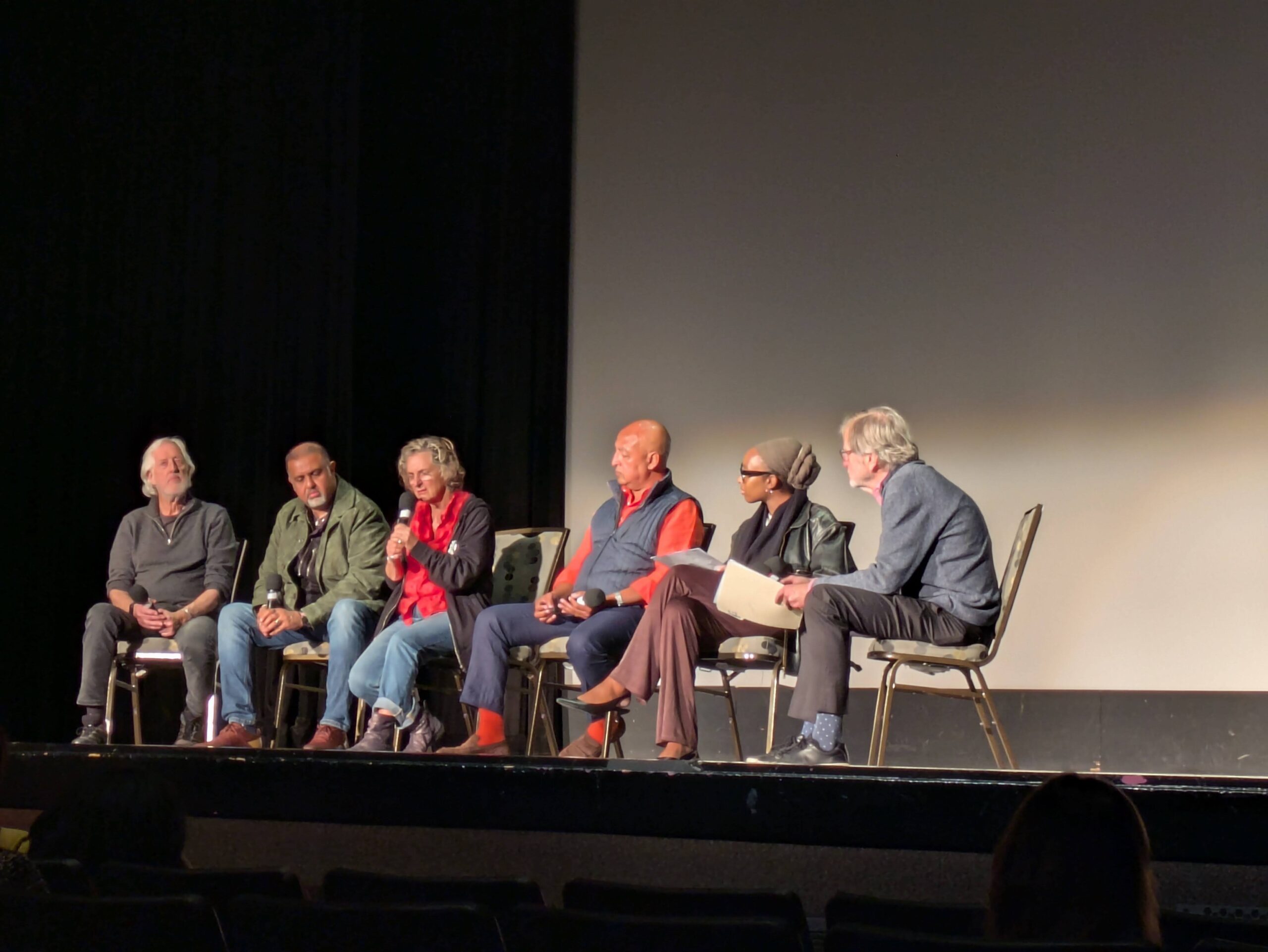
On Thursday evening University of Maryland students, staff and community members gathered in the Hoff Theatre at the Adele H. Stamp Student Union to watch an independently-funded documentary about the Ethiopian famine in the mid-1980s and the music that came out of it.
The music shown in the documentary, “Stand Together As One,” included the singles “Do They Know It’s Christmas?” by European supergroup Band Aid and “We Are the World” by American supergroup U.S.A. for Africa. Europe and the United States also hosted the musical festival Live Aid, which was held in London and Philadelphia, respectively.
As shown in the documentary, these collective efforts raised over $150 million to relieve Ethiopians of the famine; however, the documentary also stated that the aftermath left most people thinking Ethiopia is an impoverished country, even though that’s not the case.
In a panel hosted by junior journalism and public policy major Sophia Parkins and Capital News Service’s Managing Director Marty Kaiser, the documentary’s co-producer Salim Amin spoke on his late father Mohamed’s involvement in publicizing the famine, along with BBC correspondents Michael Buerk and Mike Wooldridge.
“He had covered wars and famines and genocides prior to that,” Amin recalled, “but for some reason, that film and that visit really moved him to a degree where it was a story he wouldn’t let go of.”
Mohamed’s dedication to covering the famine could be compared to Dame Claire Bertschinger’s dedication to caring for young children as a nurse for the International Committee of the Red Cross, as shown in the documentary.
Bertschinger, who was appointed Dame Commander of the Order of the British Empire in 2010, recalled having to choose between 50 and 70 children under the age of five years old to feed out of thousands of other kids, and she felt so guilty that she refused to talk about it for 20 years.
Despite the trauma, Bertschinger managed to survive living in Ethiopia, residing in Castle Hotel for a year with “no running water [and] no electricity,” she said. She also had access to the radio, which is when she heard “Do They Know It’s Christmas?” for the first time.
At the end of the panel Parkins asked, “As everyone walks out of the Hoff Theatre tonight, what’s the one conversation you hope keeps going on the walk back across campus?”
Urban planner Gabriel Abraham, who escaped Ethiopia with his family just before the famine worsened, emphasized the butterfly effect: small gestures from home can amplify larger actions, and “we don’t have to all aspire for grand gestures.”
Finally, Chip Duncan, who produced the documentary with Amin, ended the panel with a call to action for the audience: “Wherever your passion lies, don’t wait for the government to do it. You got to do it.”