

Maryland leaders urge students to act in the face of the Trump administration’s impact on public health
Two Maryland state leaders urged university students to advocate against the Trump administration, as regulations on Medicaid and SNAP benefits are set to prevent Marylanders from accessing those resources.
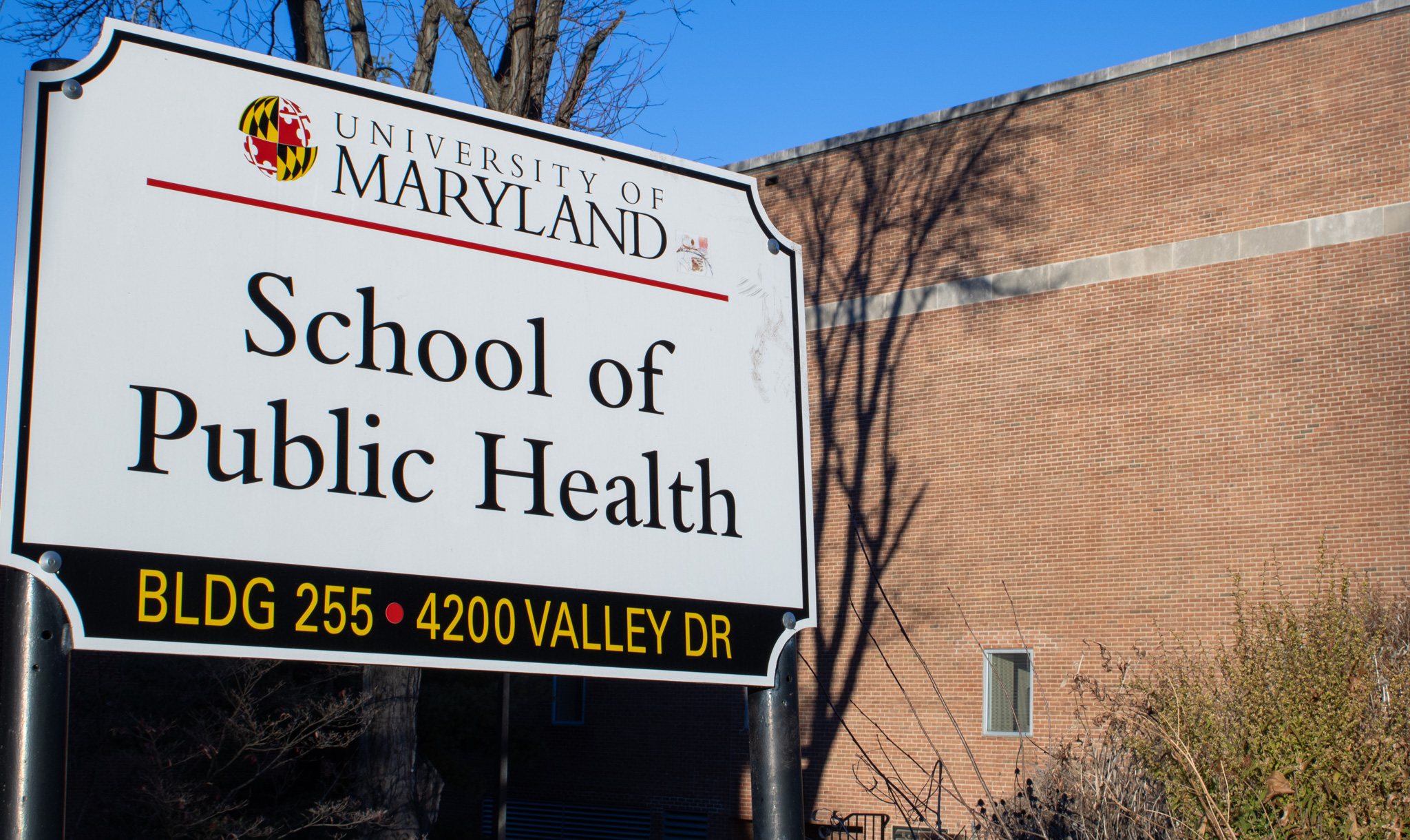
Montgomery County Councilmember Laurie-Anne Sayles and State Delegate Joseline Peña-Melnyk spoke to a crowd of roughly 30 University of Maryland community members on Monday. The Association of Black Public Health Students (ABPHS) sponsored the event, called “From Capitol: To Community,” in the School of Public Health’s Friedgen Lounge.
Both leaders discussed the Trump administration’s impact on public health and the actions they are taking as elected officials to challenge these regulations, which restrict state governments in regulating healthcare.
“The federal government is truly working against the state and local governments,” Sayles said.
Sayles also said that the Montgomery County Council came up with $7.7 million to not just feed residents for two weeks, but also to address the impacts of the government shutdown. $3.5 million of the funds went to food assistance, according to WUSA9.
She discussed the effect the Trump administration’s stoppage of SNAP benefits and regulations to Medicaid has on families, emphasising that people rely on and need access to these resources.
“They can’t even take a break, because now they have to figure out: Am I going to qualify? Do I need to find another job? And it’s because [the federal government is] putting in regulations that we cannot offer these resources, SNAP benefits or Medicaid to our undocumented residents,” Sayles said.
The Trump administration’s “Big Beautiful Bill” altered Medicaid, a joint program between states and the government that provides healthcare to low-income individuals. Starting in 2027, it will require people on Medicaid to reapply for the program every six months and to provide proof of work, which creates barriers to care, Peña-Melnyk said.
“I have been really busy with the Department of Health, the secretary, with the commissioner of the Maryland Insurance administration, [and] with the Maryland Health Benefit exchange,” said Peña-Melnyk, adding that she is trying to understand the consequences the Big Beautiful Bill will have on Maryland.
Jordan Palmer, a first-year master’s of public health student and graduate ambassador of ABPHS, said that the event was held to introduce public health students to the real-life and policy application of the field.
“There are many classes here that you can take related to policy and pushing for, you know, change in public health, in terms of government and advocacy,” Palmer said. “But outside of internships, there isn’t really a lot of practice.”
Jael Johnson, a first-year master’s of public health student and communications coordinator for ABPHS, attended the talk to learn about how to advocate for her career field during an administration that does not support it.
“It is kind of daunting to go into public health and then to know that I may or may not have a job come after or funding that people rely on will be a little infrequent,” Johnson said. “But it’s good to know that there are other students who aren’t going to lay down.”
Adah Obat, a senior kinesiology major, was intrigued that legislators were coming to Maryland to talk about public health equity. She said that it was a big opportunity for minorities and people of color to see positions that undergraduates like her are aspiring to be in.
“We know that public health is under attack right…” Obat said. “It is very important for us as the future of public health and healthcare in general, to strive for more, work hard and implement laws and policies that empower the [less fortunate] and the oncoming generations.”
Obat said that the Trump administration’s denial of resources like Medicaid and SNAP to people who use them is disappointing and unfortunate, but it motivates her to work harder in her field.
“I think as a public health student, this gives me motivation,” Obat said. “It kind of puts a battery in my back to work harder and get into higher positions as well, to give more opportunities and also create more events and more laws and policies.”
I’m so glad students are seeing the challenges in their field as an opportunity to work harder for their communities!